Sunday, February 13, 2011

Mo' Madrid

Finding time to update the blog is getting harder and harder: there's so much to see and do in Spain! So, a week behind, but here's some photos from last weekend, which I spent exploring Madrid. I'm writing this having just gotten back from a tour of the south of Spain so those pictures and video will be on the way soon plus an update from my first soccer game in Spain. But first things first, here's more of Madrid:


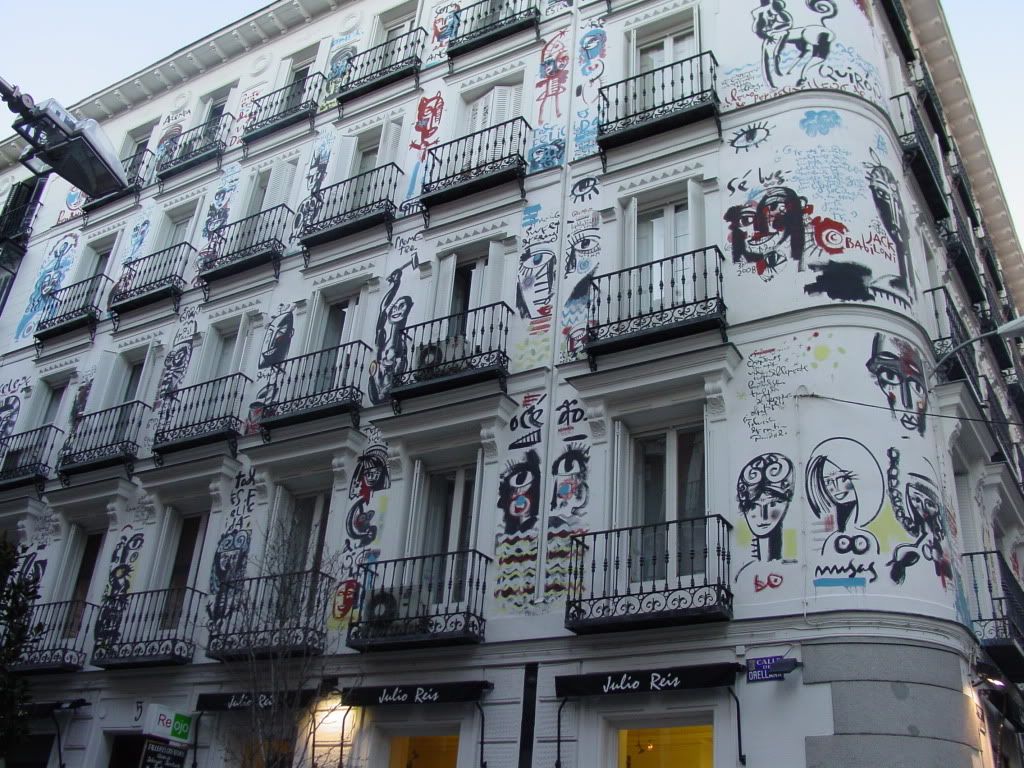
You never know what you'll encounter on an afternoon walk around Madrid. Perhaps a strangely decorated building...

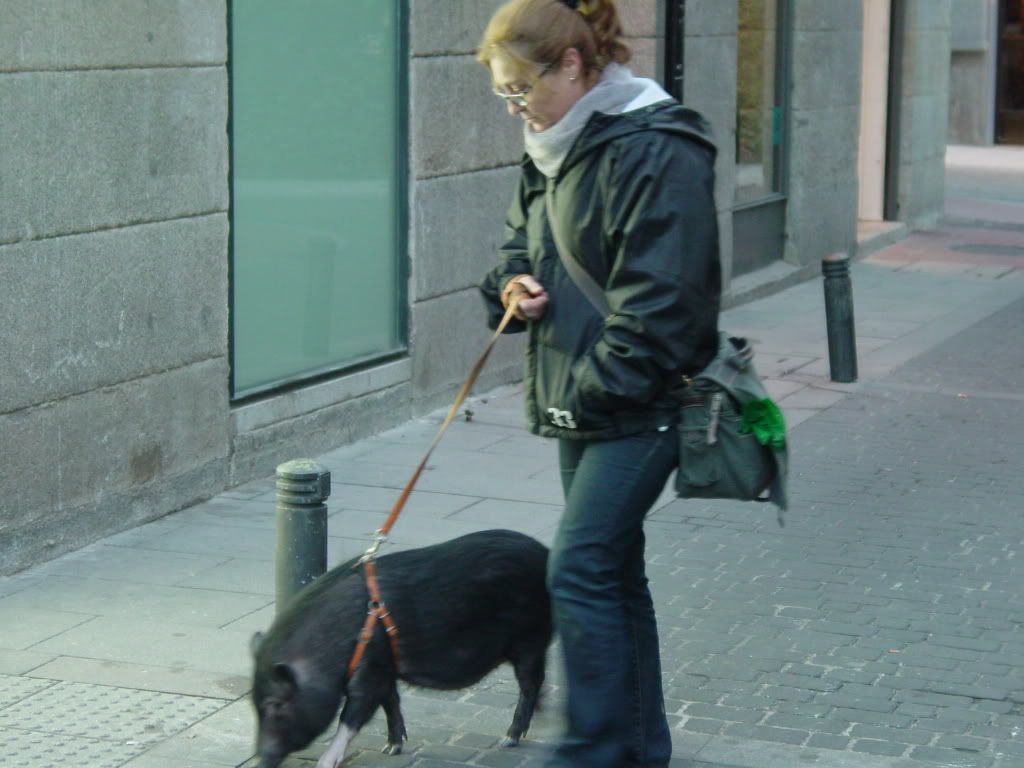
Or a woman walking her pet pig...

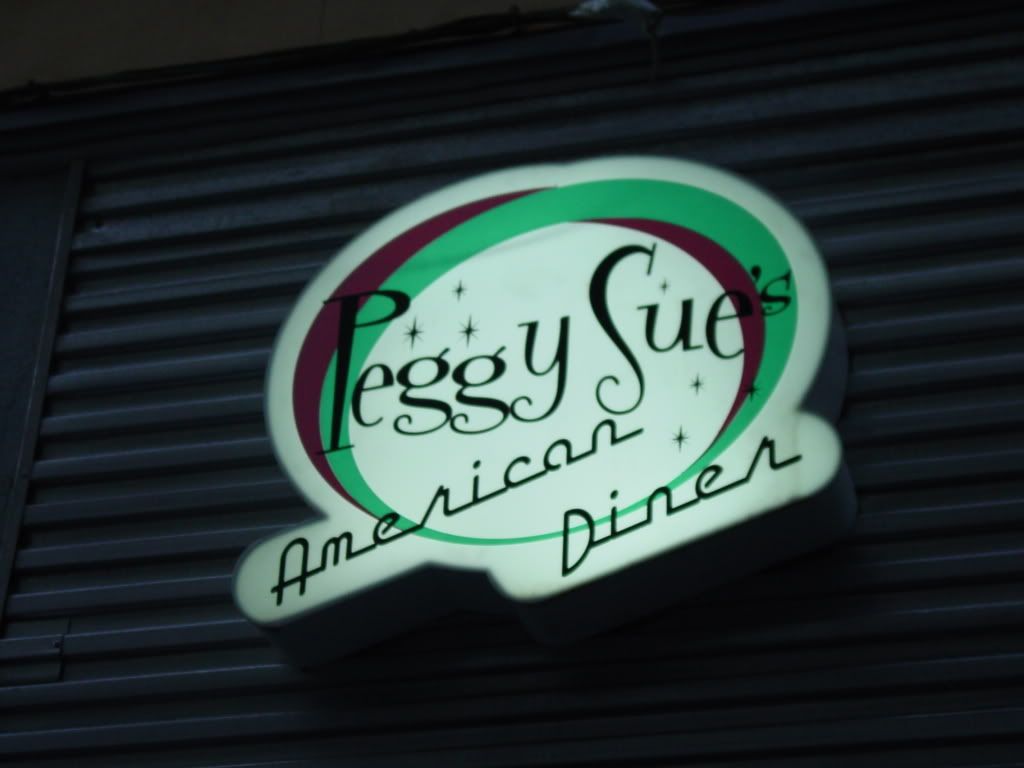
Or a little taste of home. (And, no I didn't eat there. For as good as Spanish food is, they're not quite as apt at imitating American food.

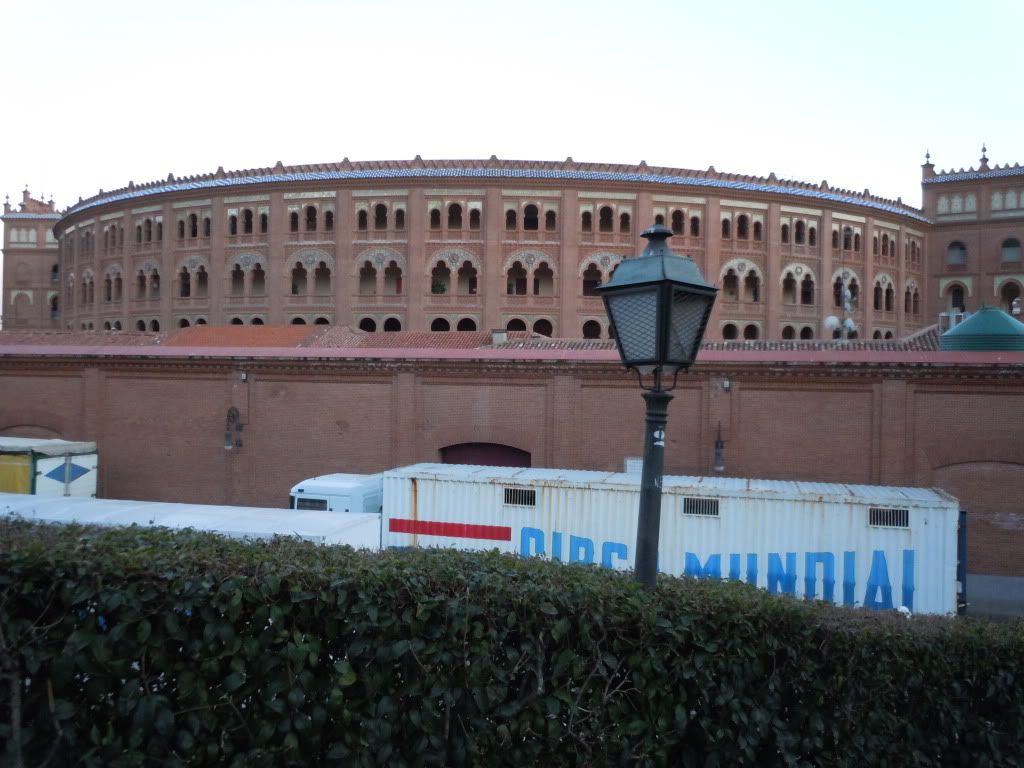
La Plaza de Las Ventas de Los Toros. Madrid's famous bullfighting ring and the most important one in all of Spain. Not sure how I feel about the sport in general (seems a bit brutal) but I'd like to go to one bullfight later this semester.

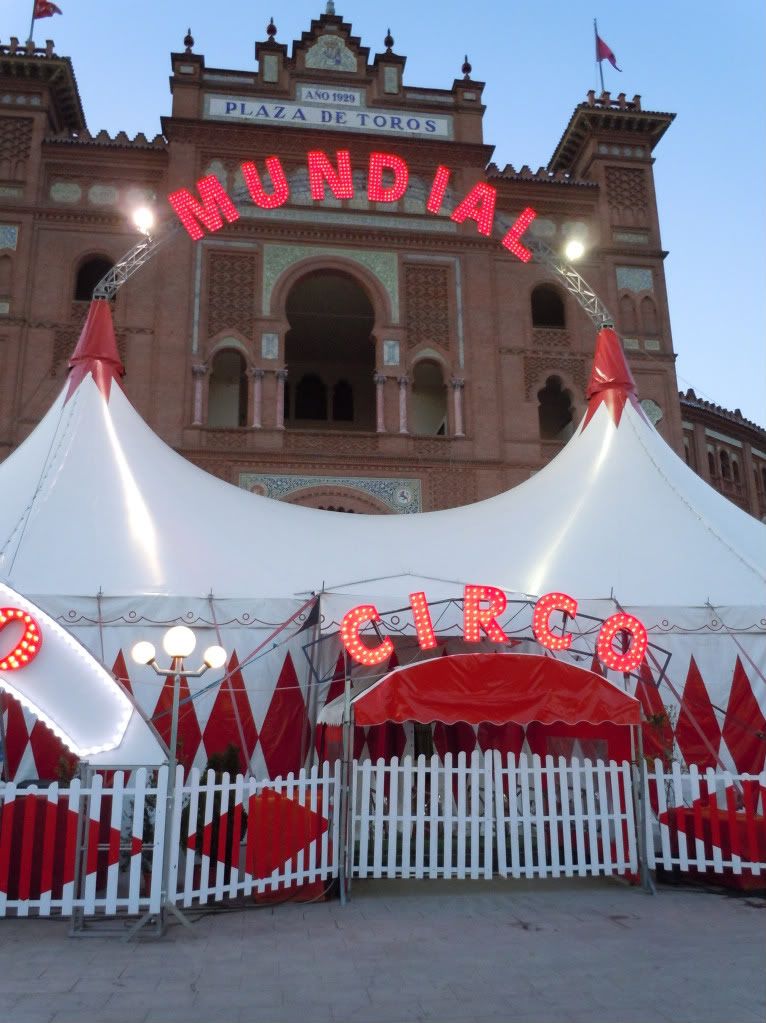
Bullfighting isn't in season again until late March so now the World Circus is in town.

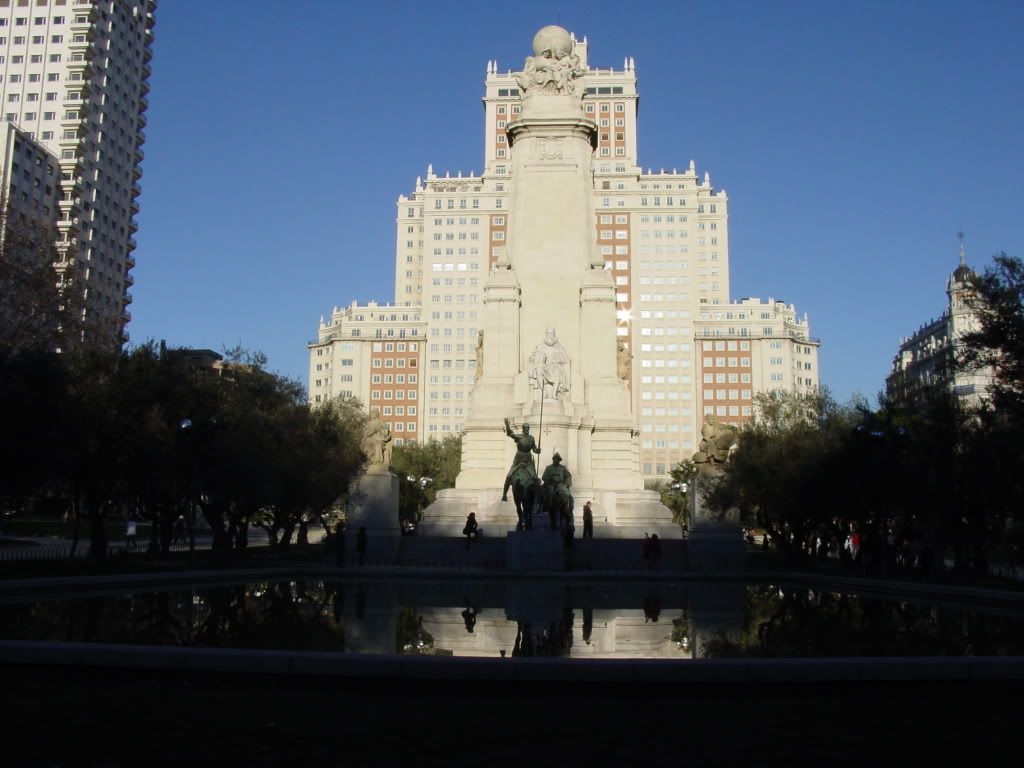
Madrid's Plaza de España. Not nearly as impressive as Sevilla's version but a nice little place nonetheless.

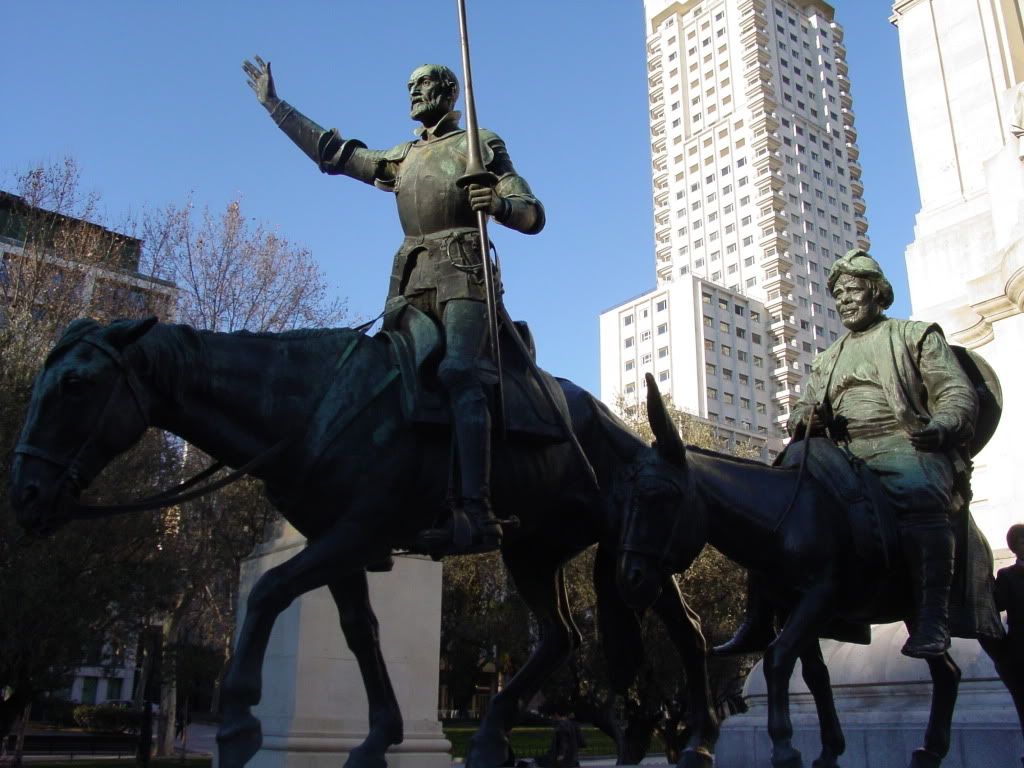
The center of Plaza de España: a statue of Don Quixote and his faithful companion, Sancho Panza.

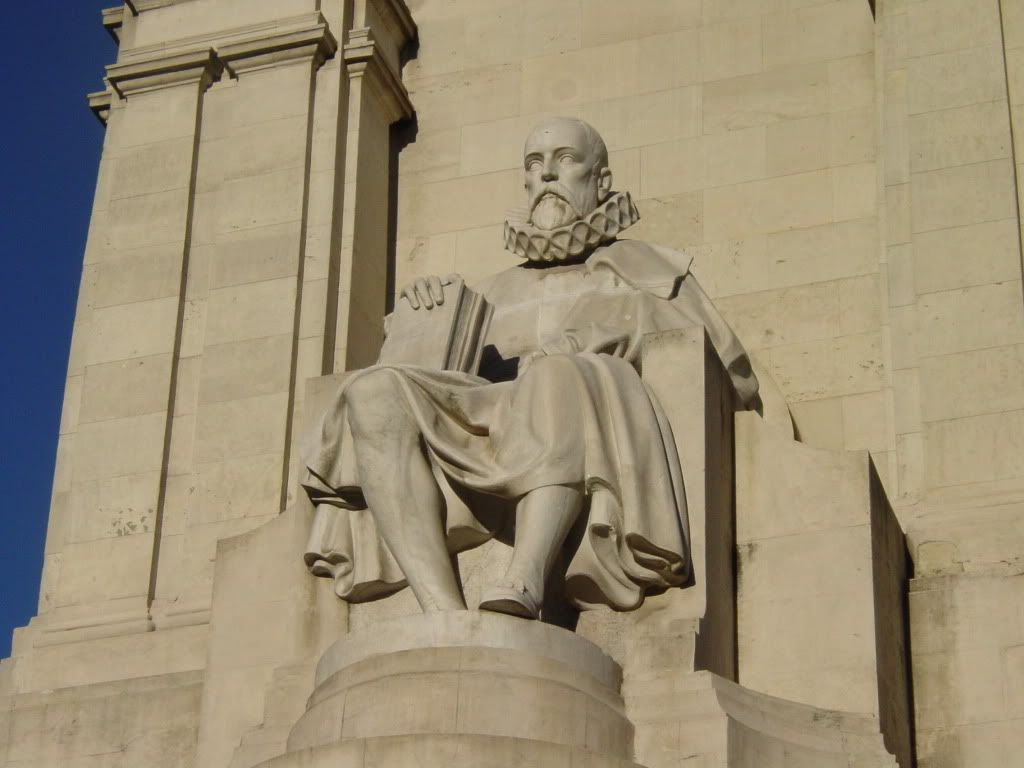
Miguel de Cervantes keeps a watchful eye on his famous characters below.

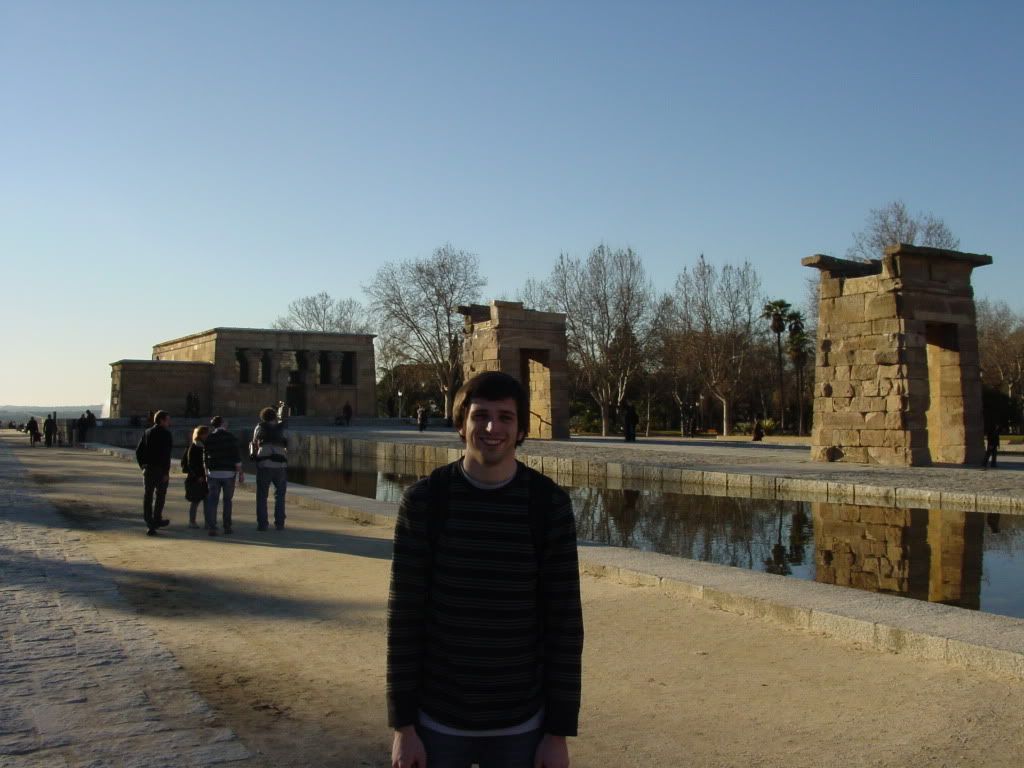
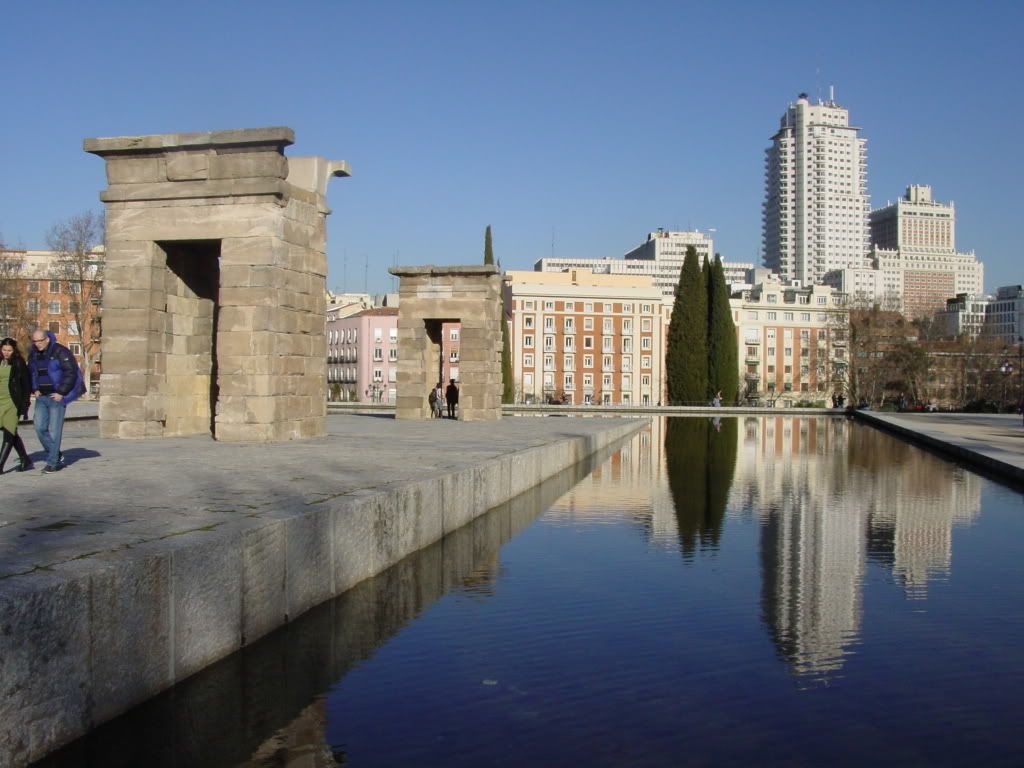
El Templo de Debod, an Egyptian temple in Madrid. I wanted to send this picture to my Mom with the message: "Hey ma, guess where I went for the weekend? Thought I'd get a first-hand look at the protests!" Don't think she would have been amused.

Apparently the temple was built in the 2nd century B.C. in Southern Egypt. Egypt shipped the temple in pieces and reconstructed it in Madrid in 1968 as a thank you to a Spanish archaeological team that helped preserve other Egyptian temples near the Nile.

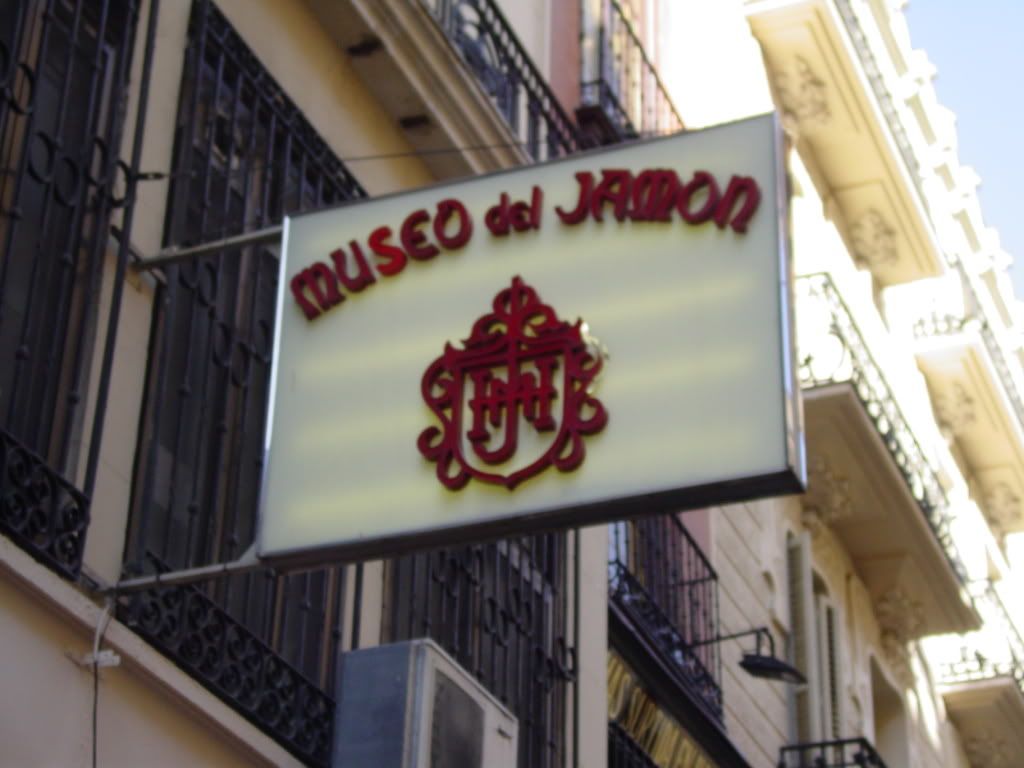
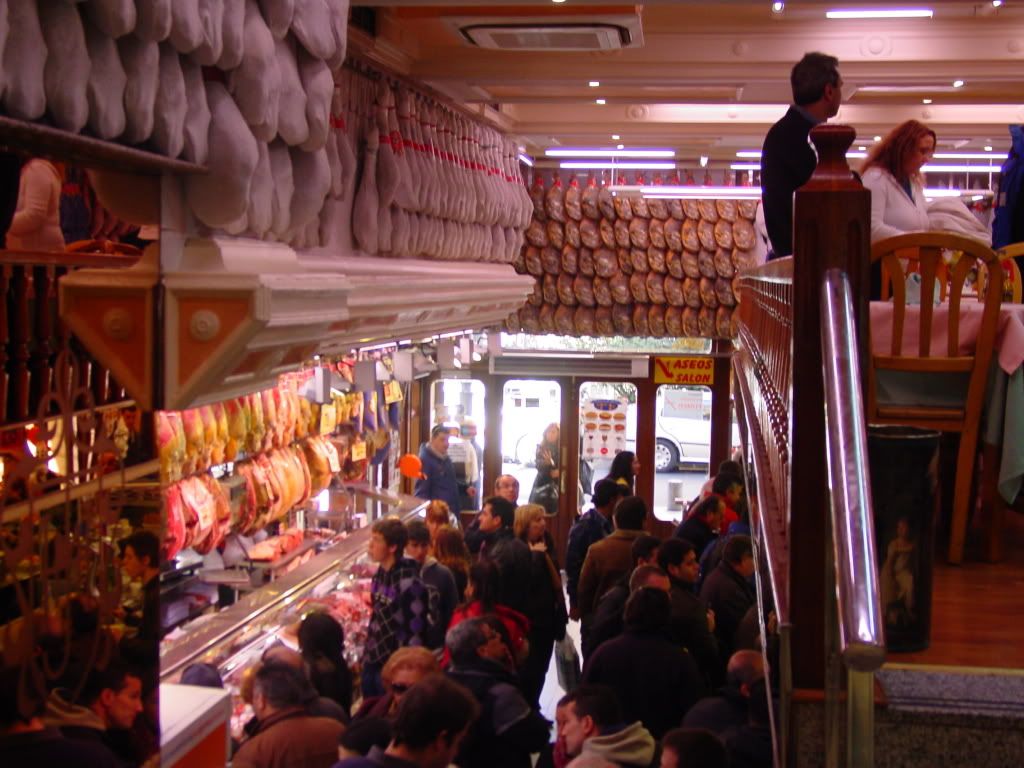
Man these people love their ham. They even have museums for it.

The inside of the "museum." And yes, those are pigs hanging from the walls. Very common decoration in Spain. We still have the "Christmas" pig sitting on the counter here at our house.

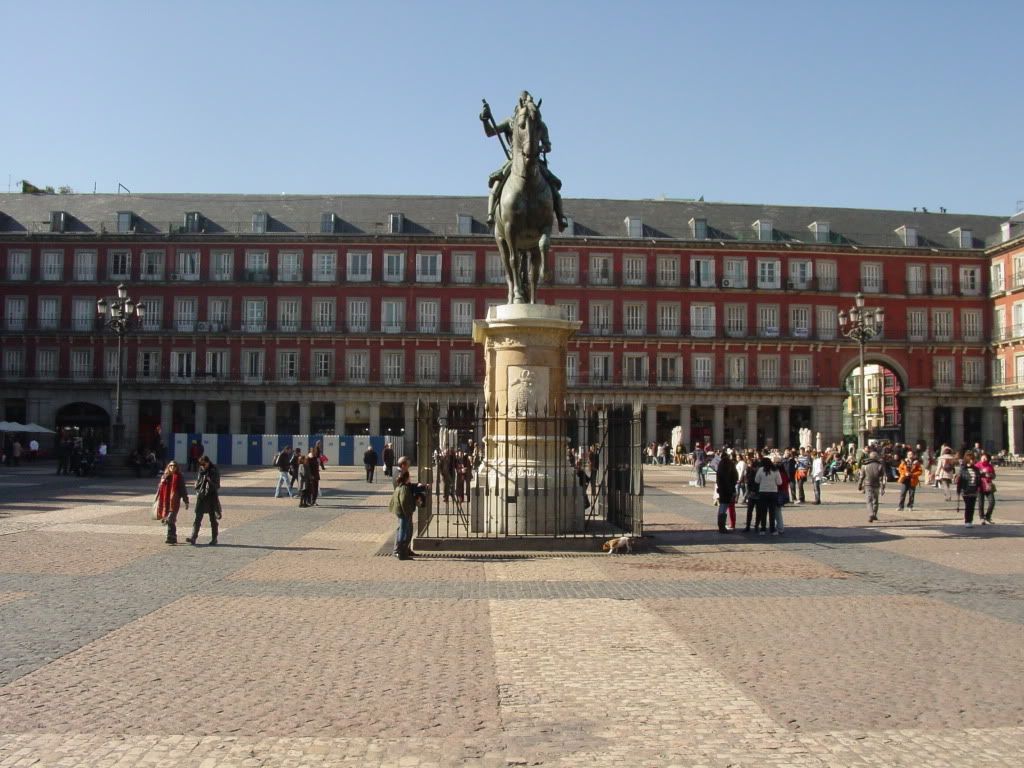
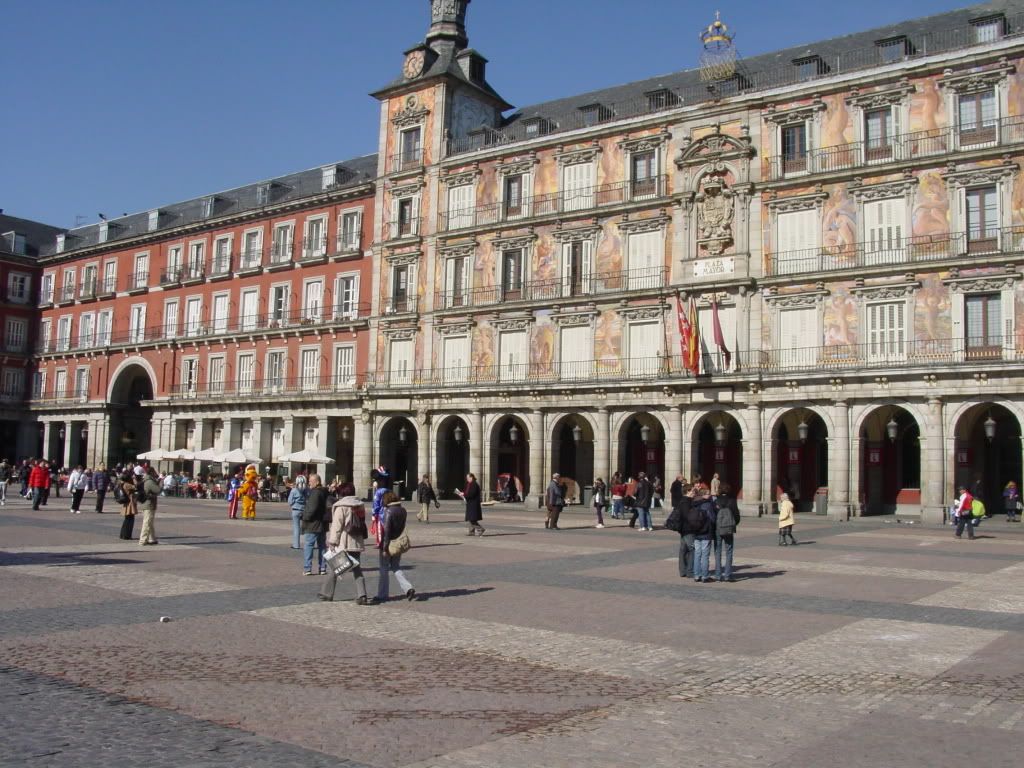
La Plaza Mayor, the center of Old Madrid.

A beautiful place and the site of many important events in Spain's history, including executions during the Spanish Inquisition.

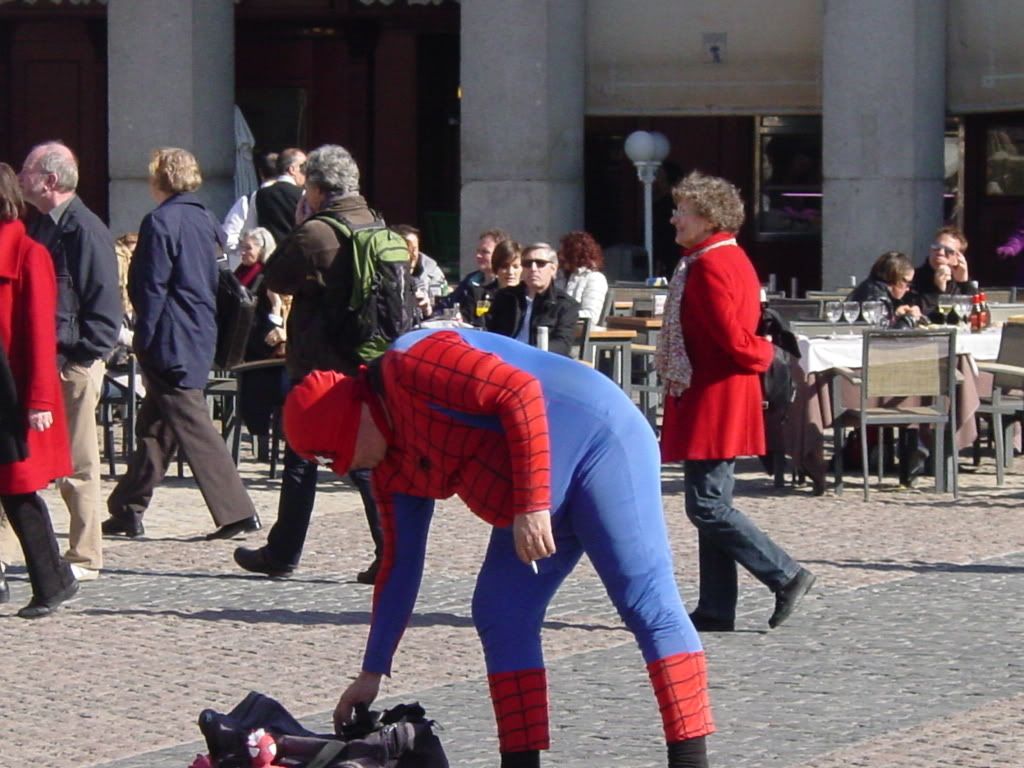
Didn't know Spiderman smoked. Or had a beer-belly.

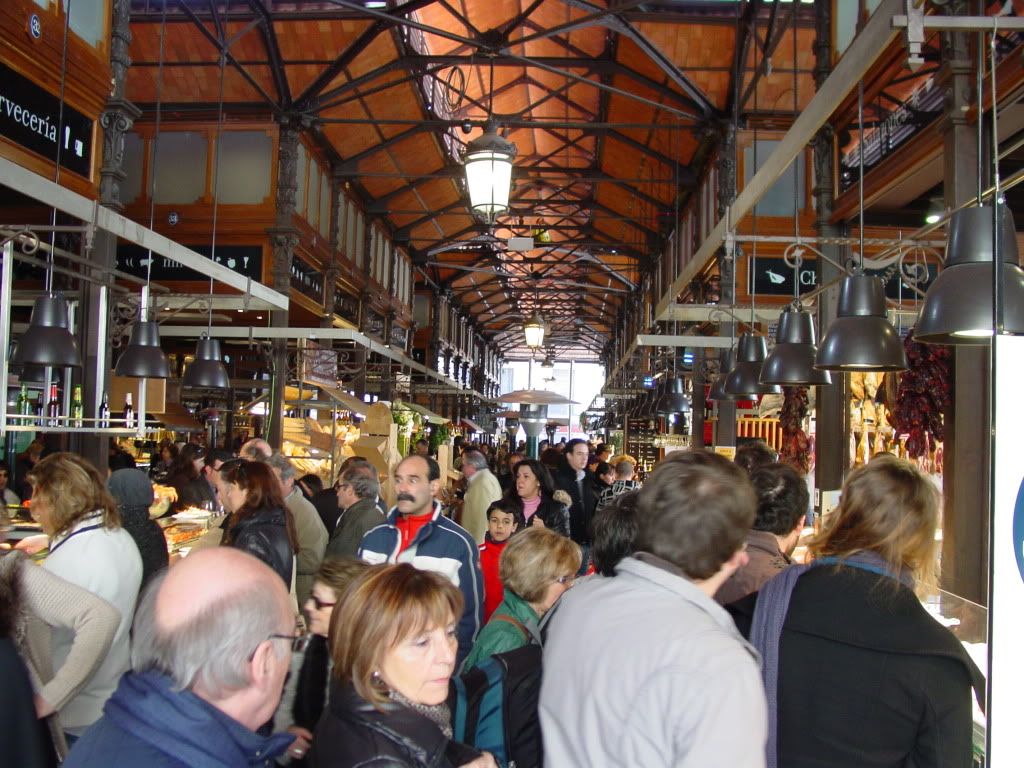
Maybe he spent too much time at our next stop, El Mercado de San Miguel. A very cool but very expensive market near Plaza Mayor.

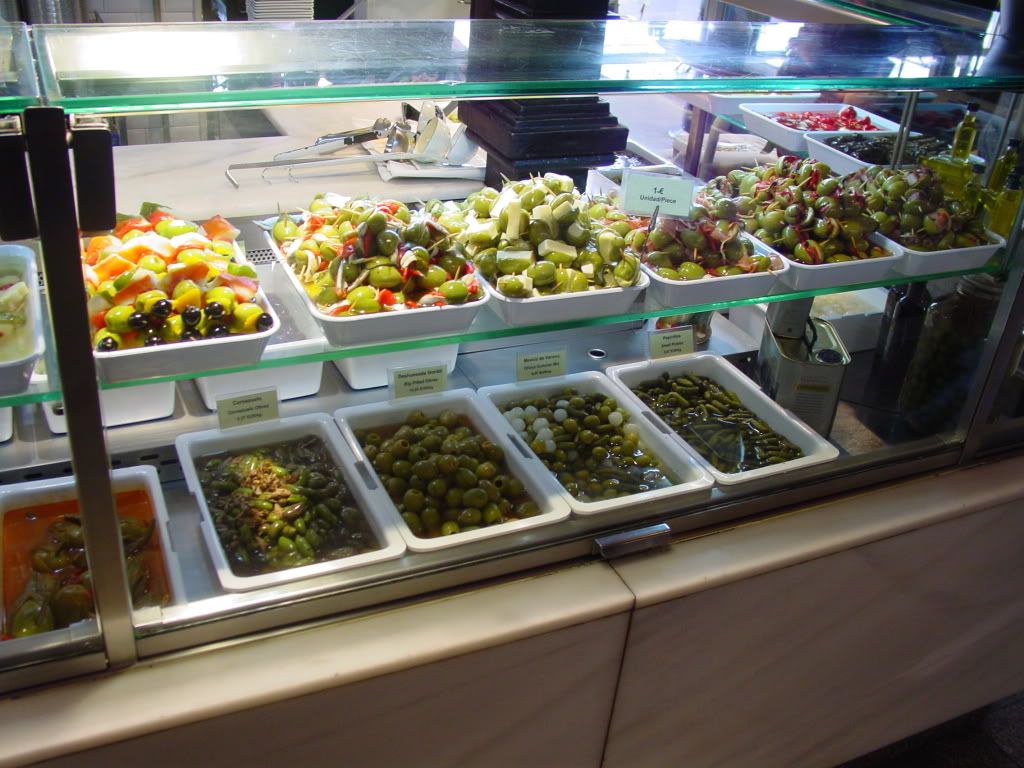
Spanish olives are delicious in Spain. Makes sense, eh?

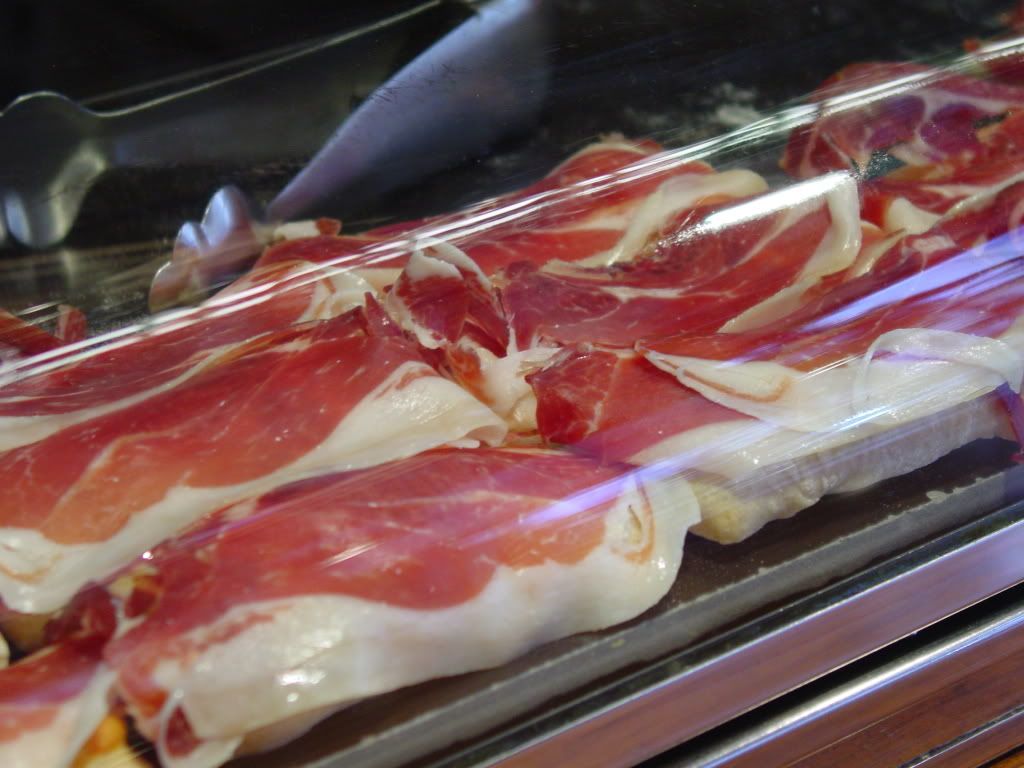
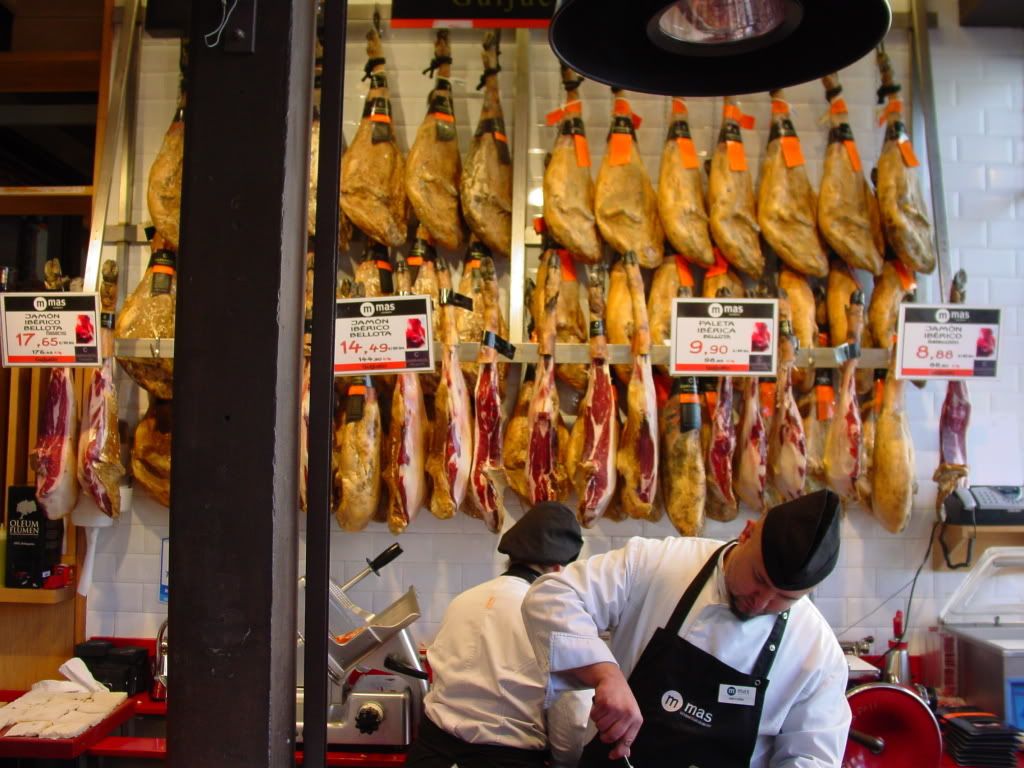
I'm telling you, these people love their ham.

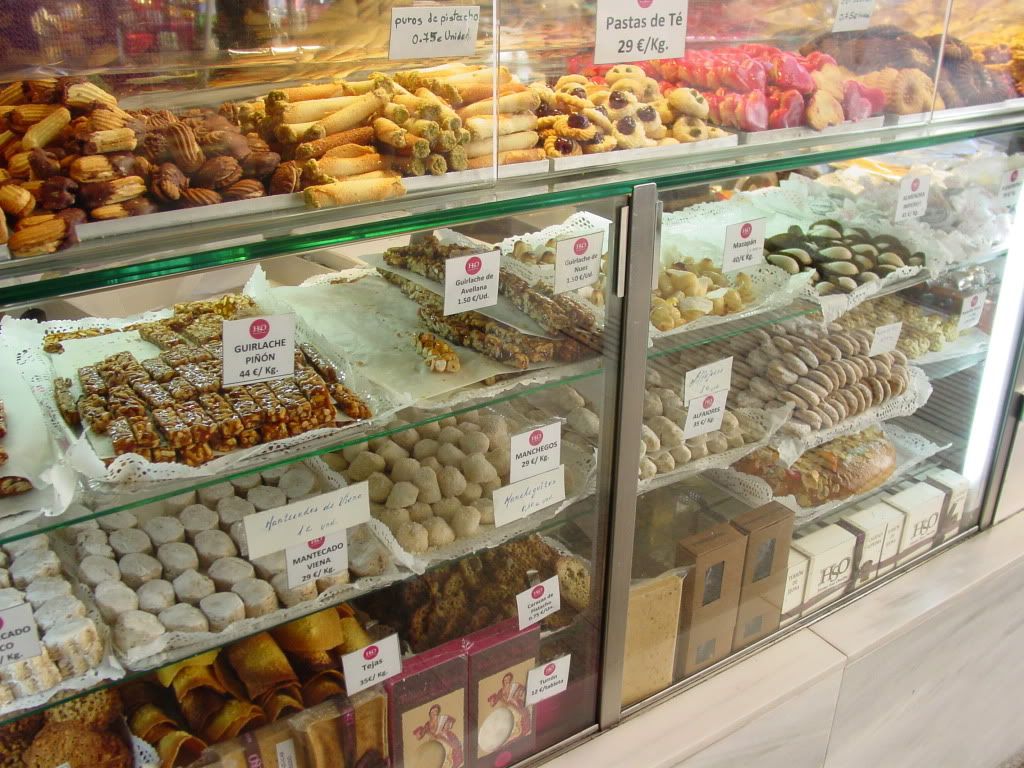
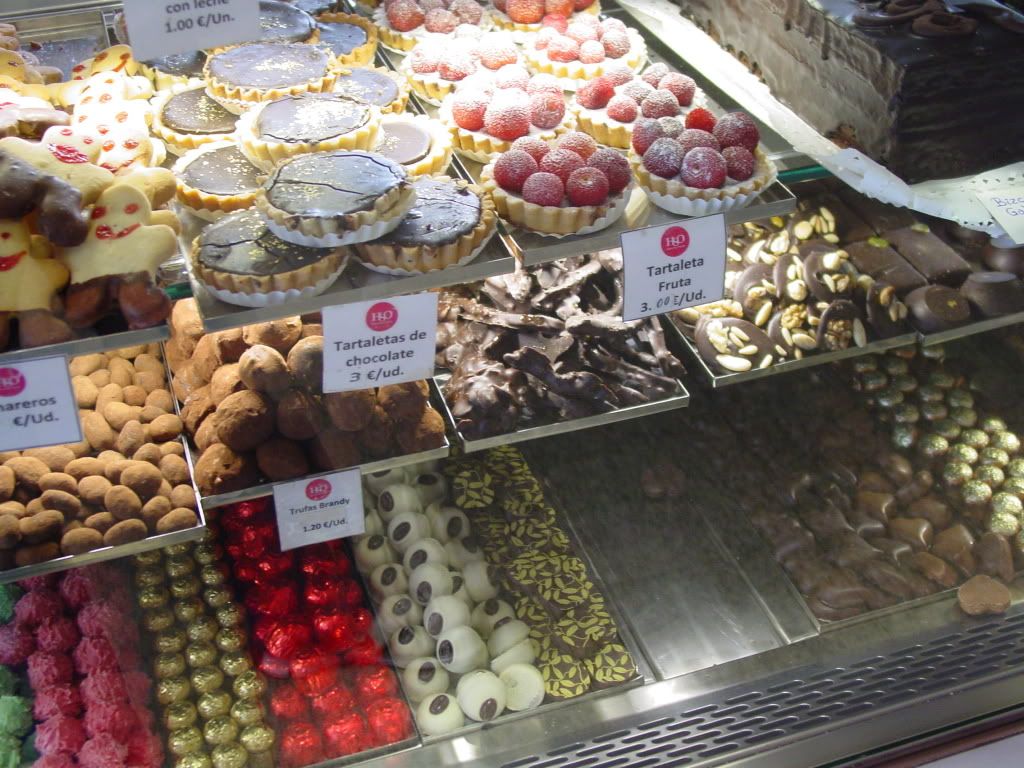
Sweet tooth?


Oh wait, more ham.

And more sweets.

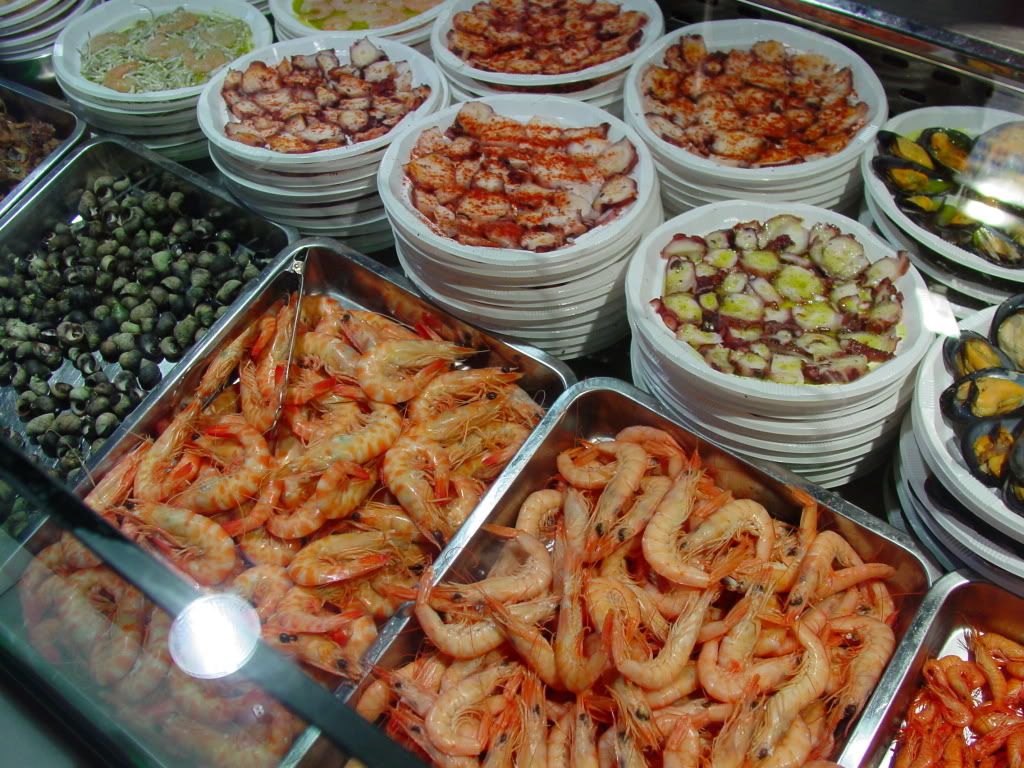
Seafood.

I find it hard to identify a lot of foods in English so sometimes I don't even try in Spanish.

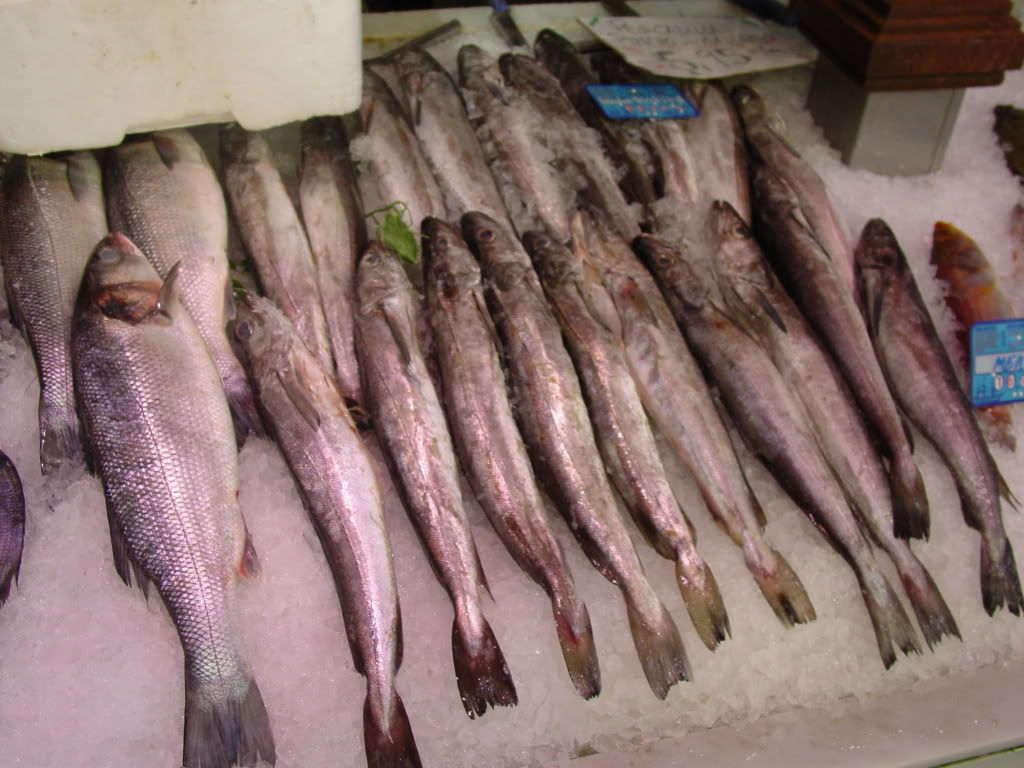
Fresh fish. Sometimes, they just cook them like this too. The other day, the señor cut the head of the fish off at the table and had me feel inside the mouth of the beast to show me it had teeth. Very appetizing.

That's all for now. Cordoba and Granada pictures will be on the way this week. Until later, hasta luego.

Thursday, February 3, 2011

Weekend in Sevilla Part 2: Alcázar, Plaza de España, Sevilla FC


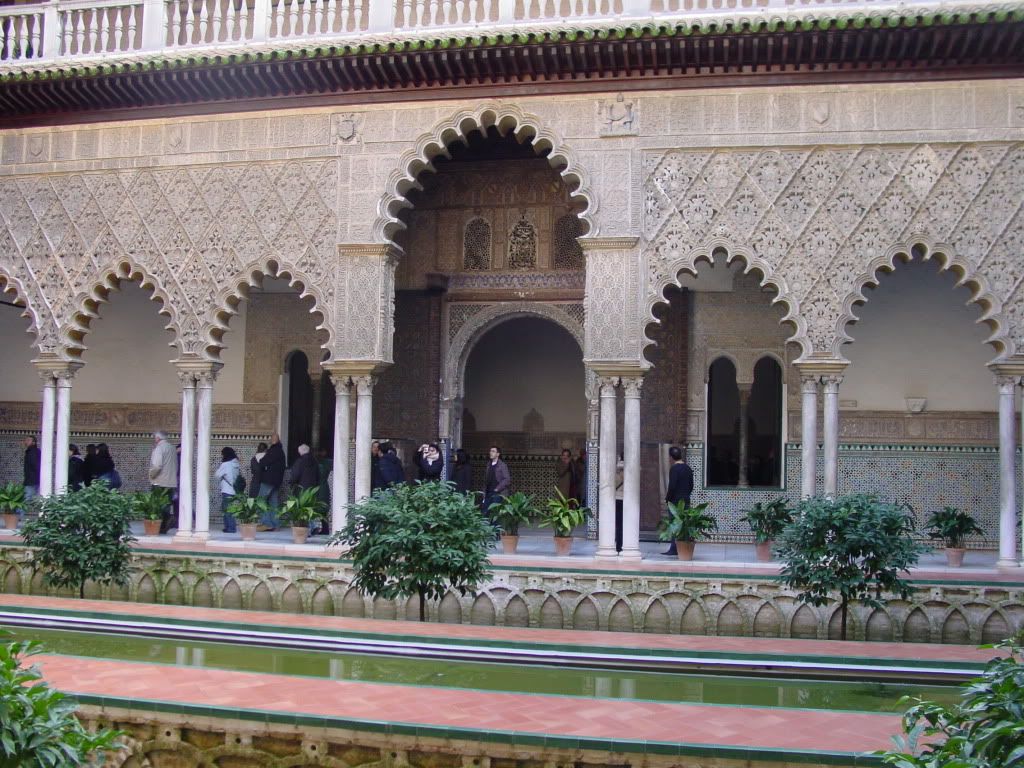
Alright y'all, time for the rest of the pictures and stories from Sevilla. One of the highlights of the trip was our visit to the city's Alcázar or royal palace. The palace was built in the Muslim style of architecture and is still the official royal residence in Sevilla, meaning that the king and queen of Spain stay there on their visits to the city. The Alcázar is a huge place with three different wings--it can't be very warm in the winter though because most of it is just open air--you can't really tell when you're inside and when you're outside. Its best feature, methinks, is its expansive gardens.


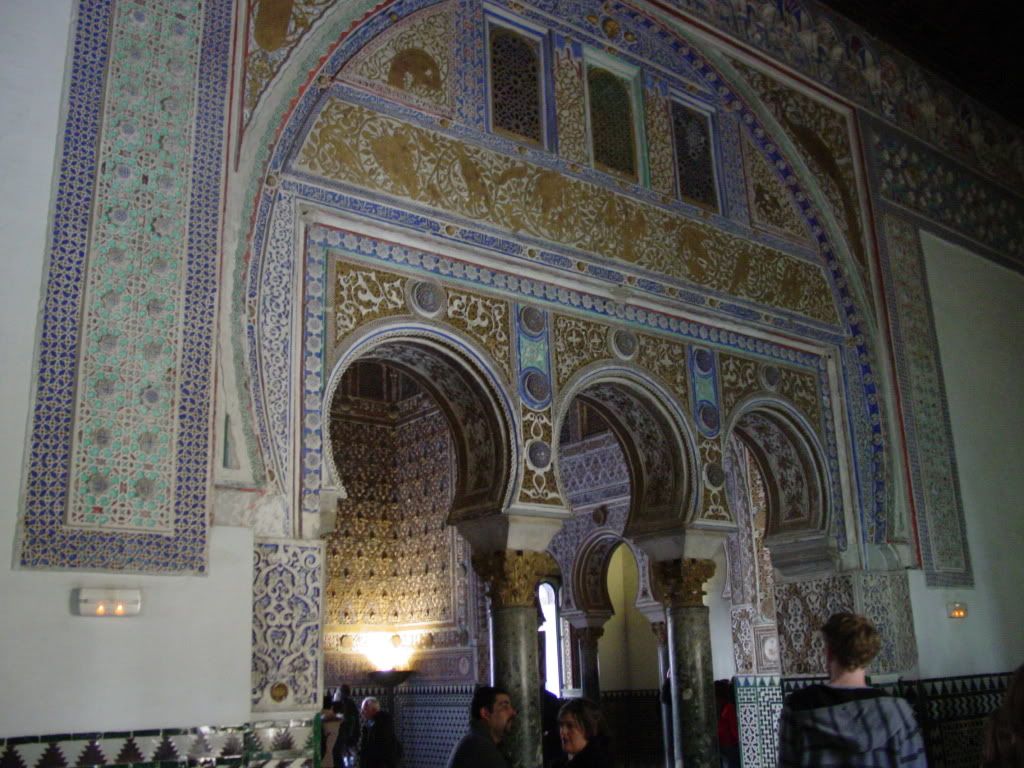
Inside of the Alcázar. Very cool Islamic architecture throughout. The south of Spain, including Sevilla, has a long history of Islamic influence because of its proximity to North Africa. It was the last very last region of Spain that the Christians re-took during the Reconquista.

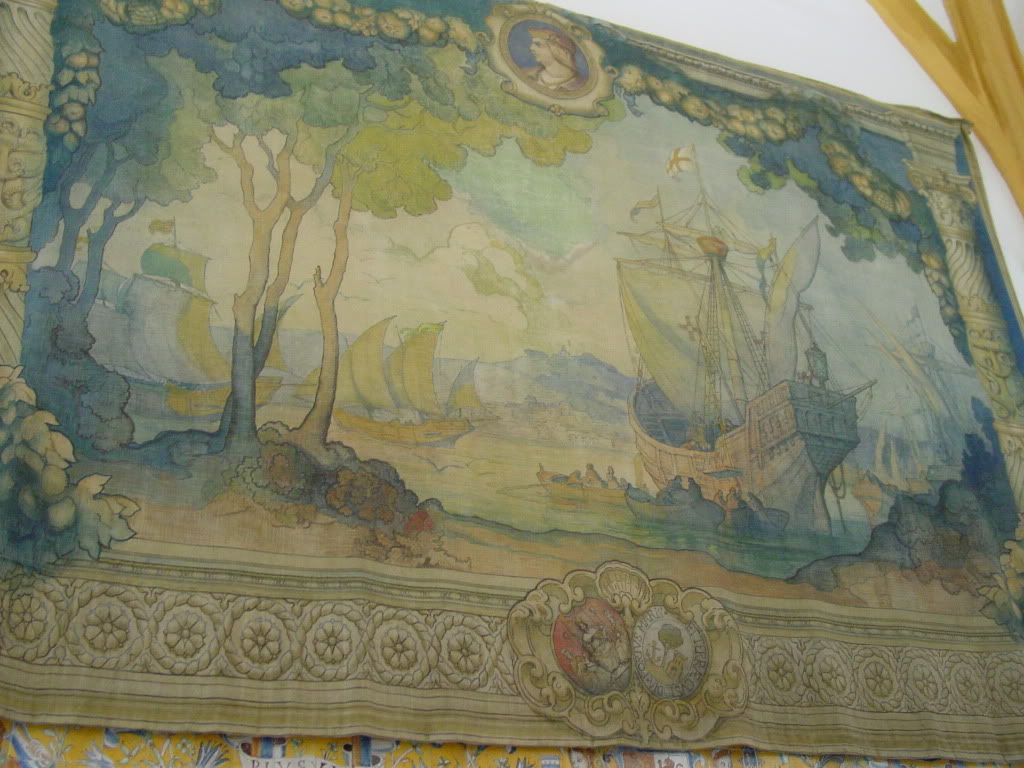
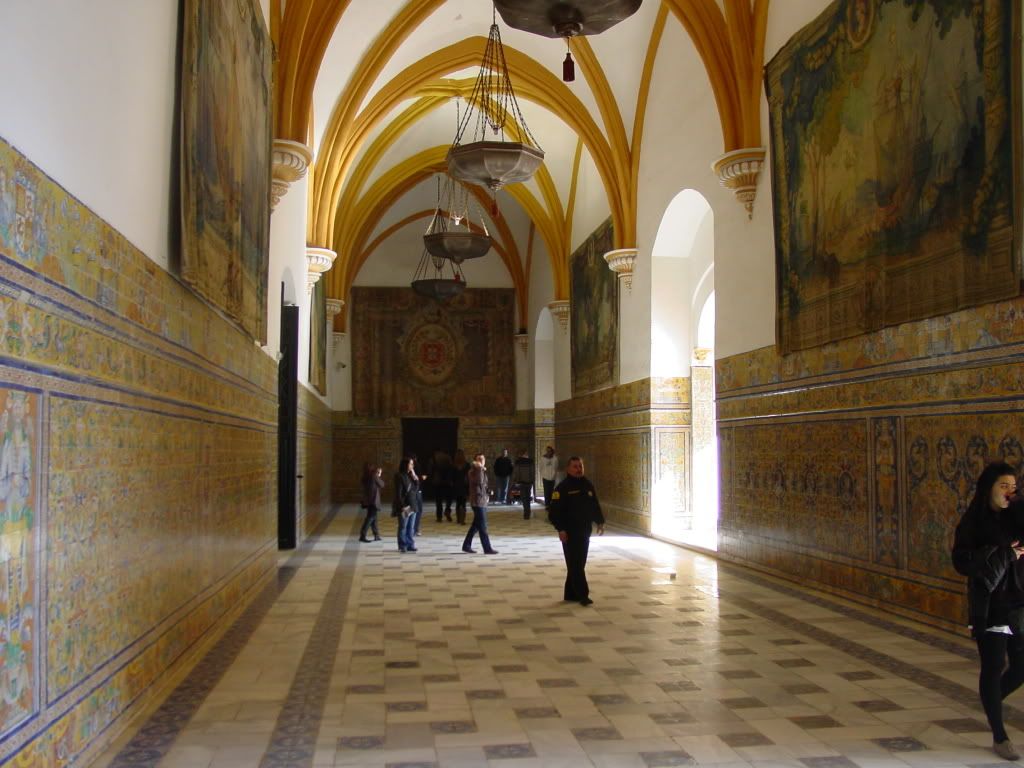
Huge tapestries on the walls. This is bigger than any one wall in my house.

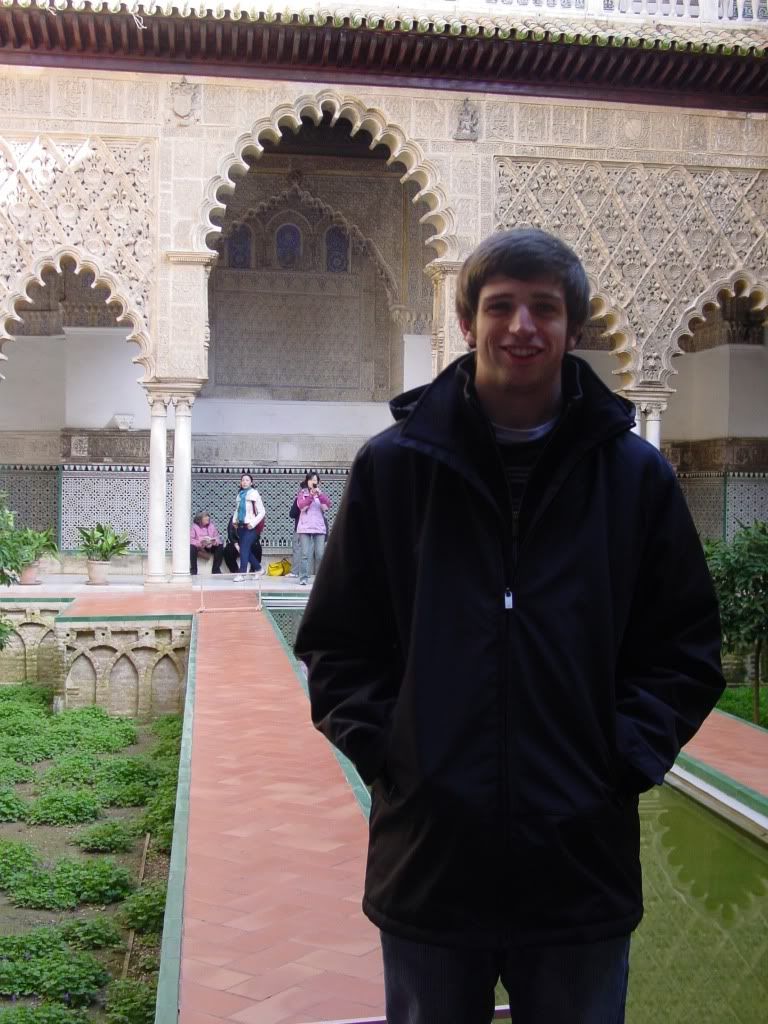
One of the inner courtyards.

Halls of the Alcázar.

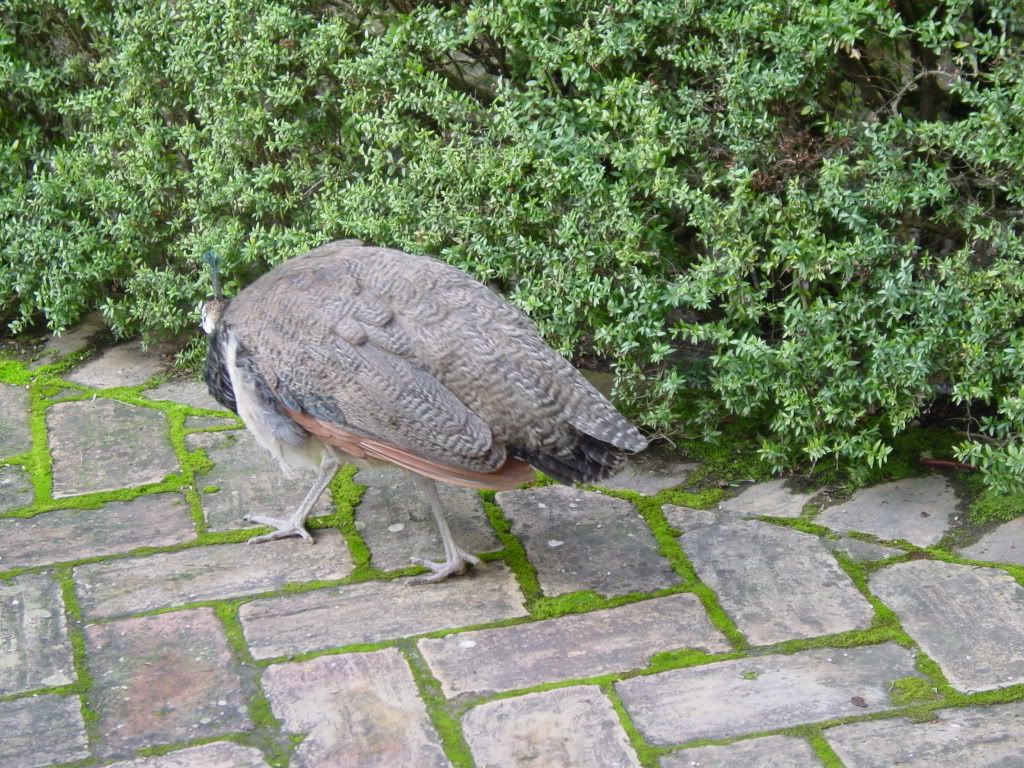
For all you Arcadians, they have peacocks halfway around the world. Just like the Arboretum!

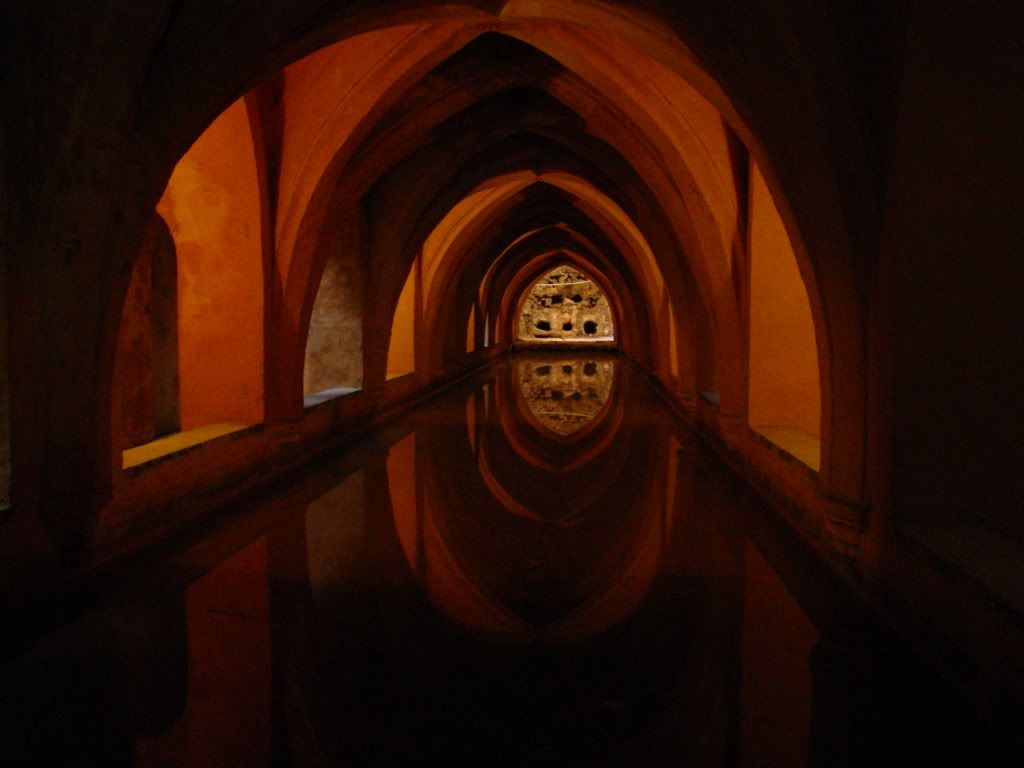
An underground bath. Very cool place to get ready in the morning!

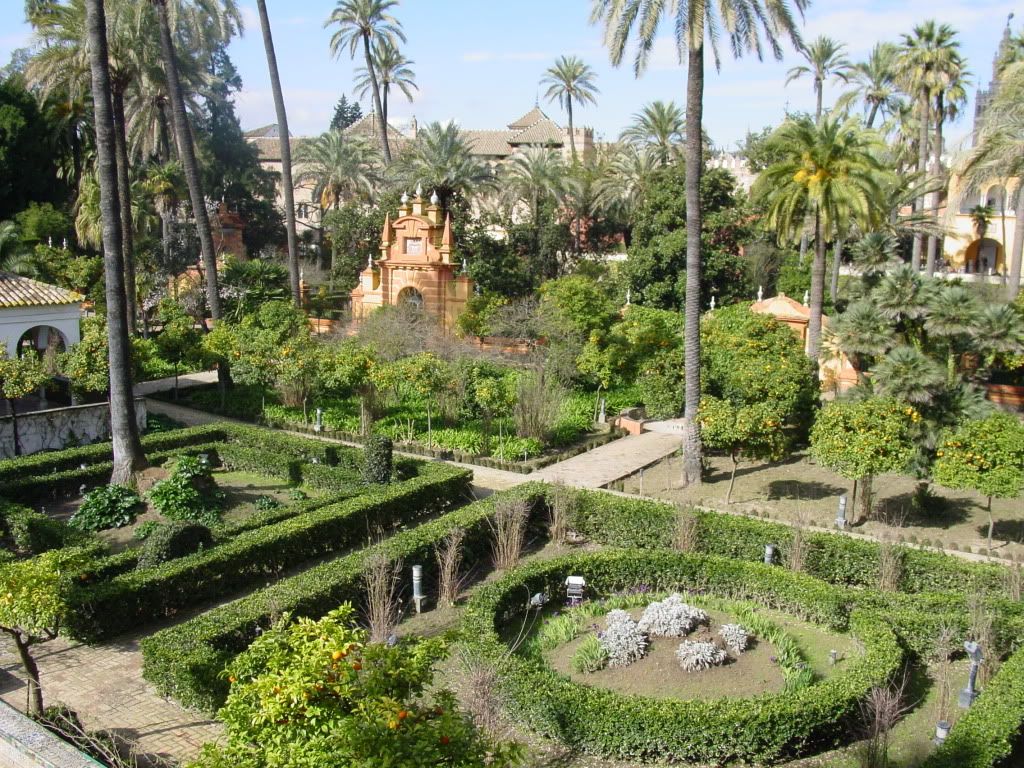
A view of the gardens. It was like having a huge park for a backyard.

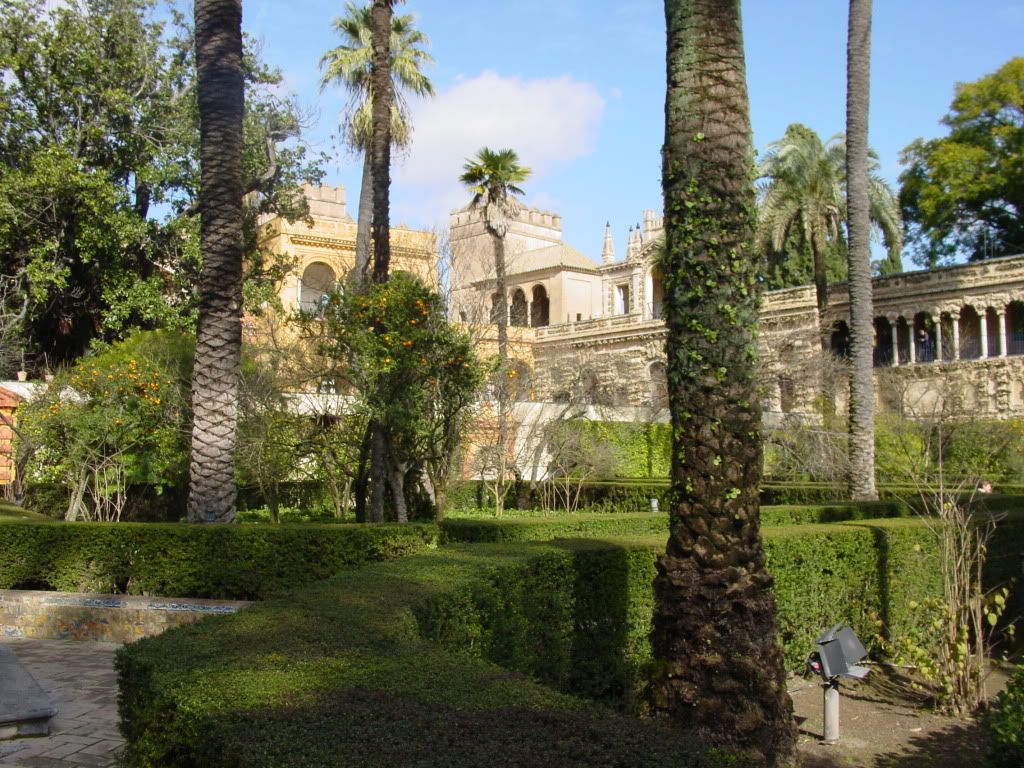
More gardens with the Alcázar in the background.

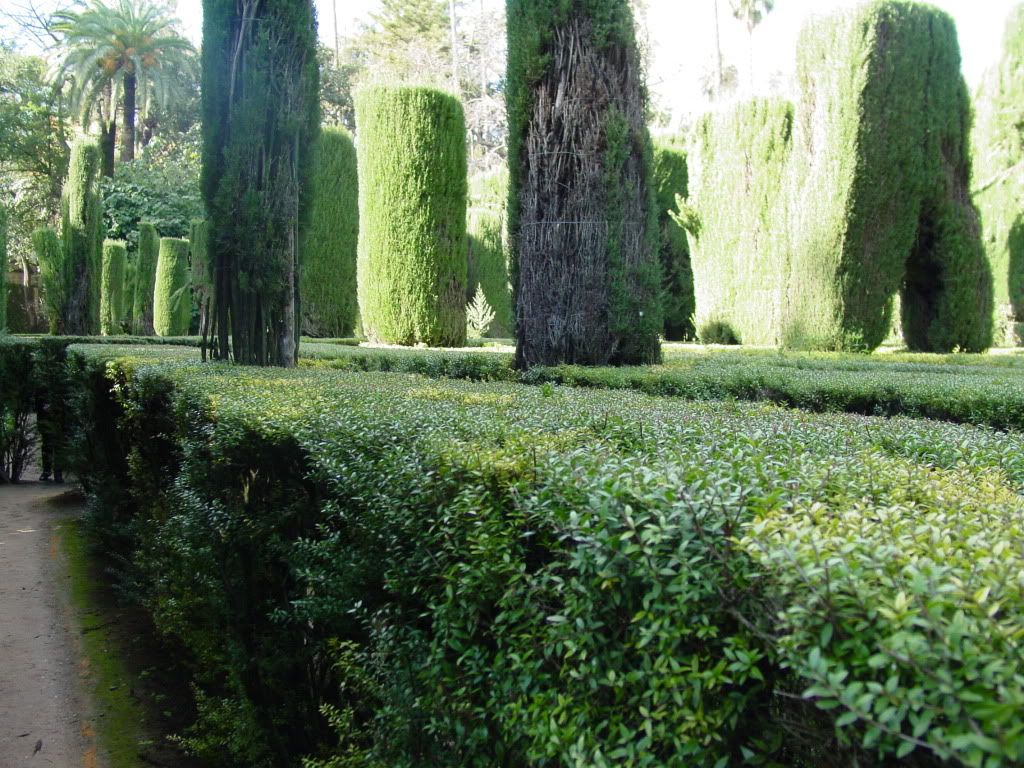
A labyrinth! Some of us played tag in here. So much fun...until I turned a corner too sharply and landed in a bush.

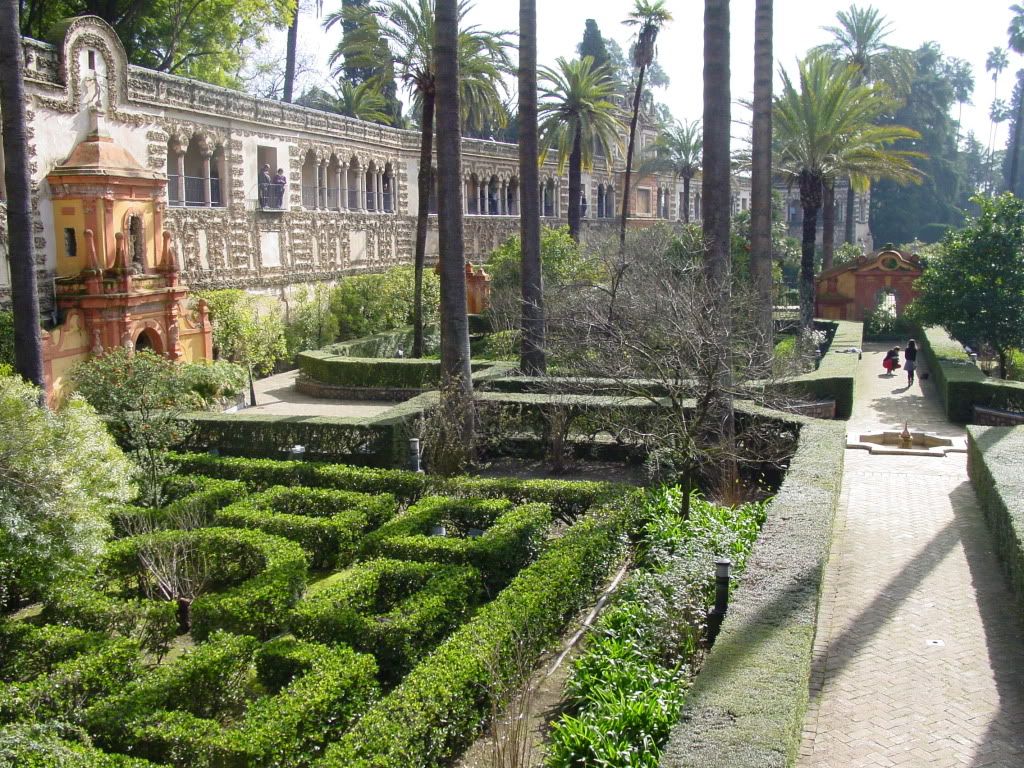
I'm sure you get it by now: cool gardens, eh?

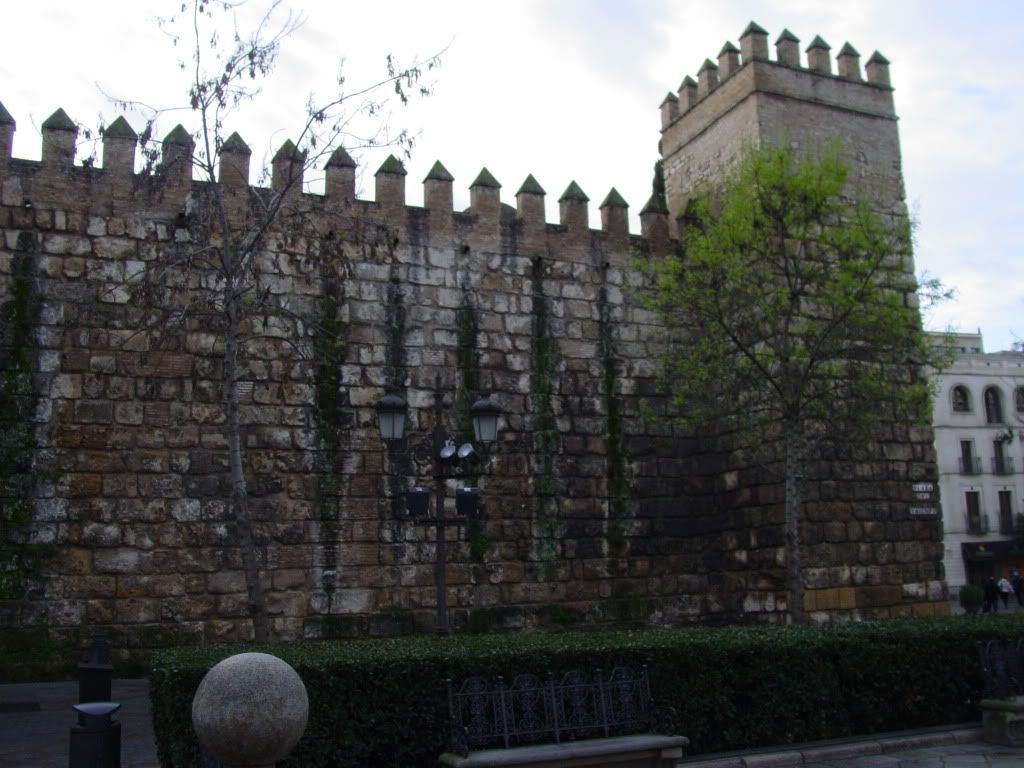
One of only two sections of the original city wall still standing.

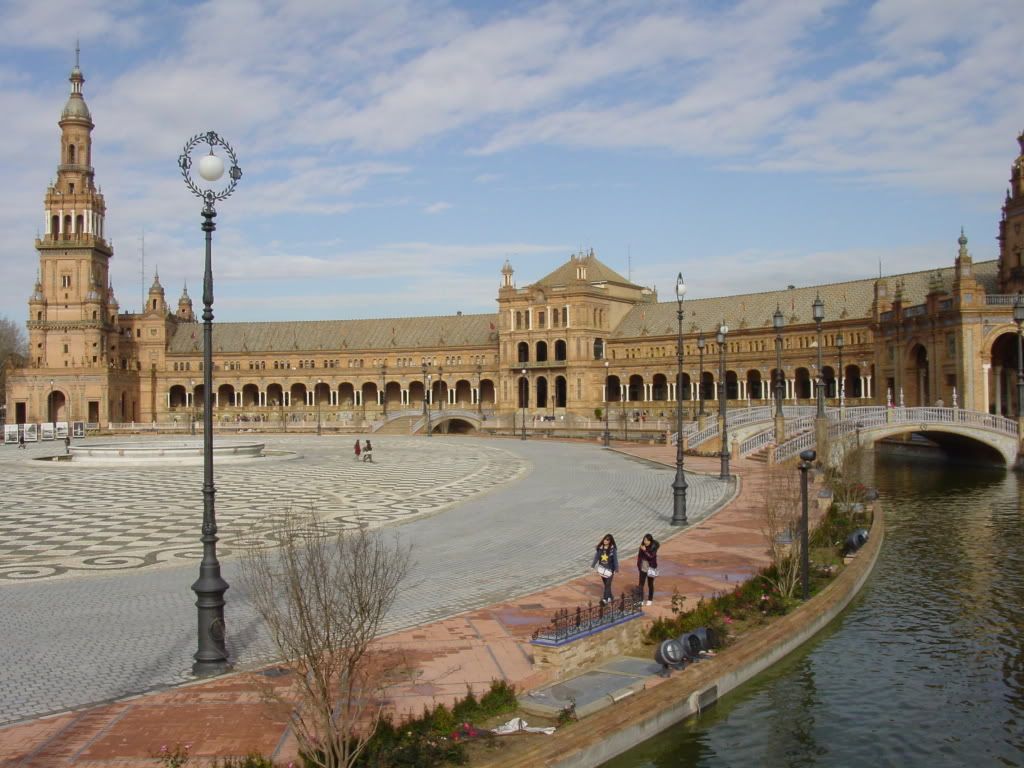
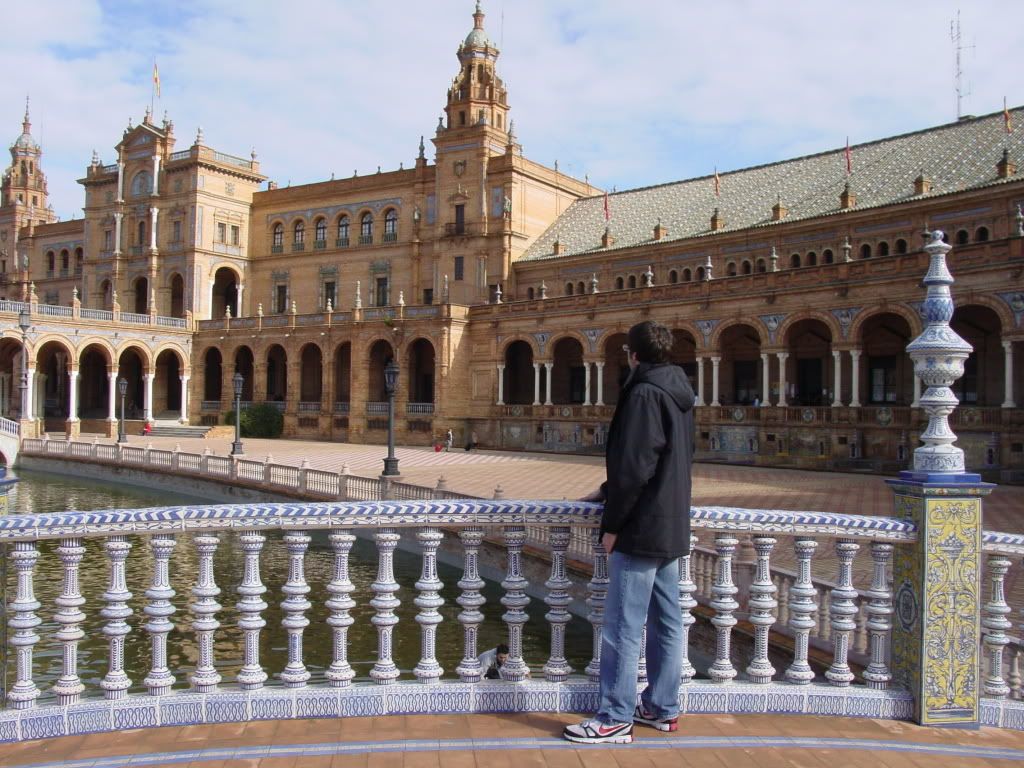
Fast forwarding several hundred years, our next stop is Sevilla's Plaza de España. Apparently every major city in Spain has a Plaza de España but I think it's going to be hard to top this one. Featured in the movies Lawrence of Arabia and Star Wars, it was built in 1929 for the Ibero-American Exposition of 1929 (re-uniting Spain with all of its former colonies). The stock market crash of the same year kind of put a dent in the festivities but Sevilla was left with quite a few impressive gardens and buildings, the crown jewel being the Plaza de España. Now the site is used for government buildings (boring, eh?) but remains a popular tourist attraction. Take a look:


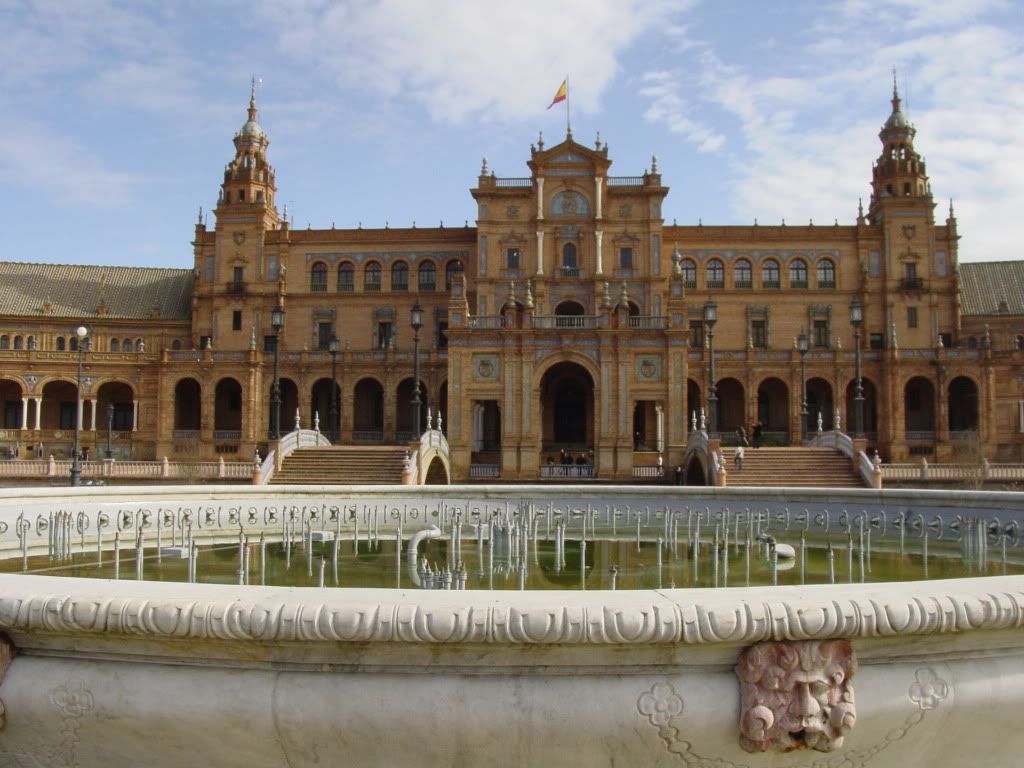
The fountain in the center of the plaza looking at the main building of the site.

An attempt at being artsy. I call it "Contemplating Sevilla."

You can rent little boats and tootle around the little lake for a little amount of time.

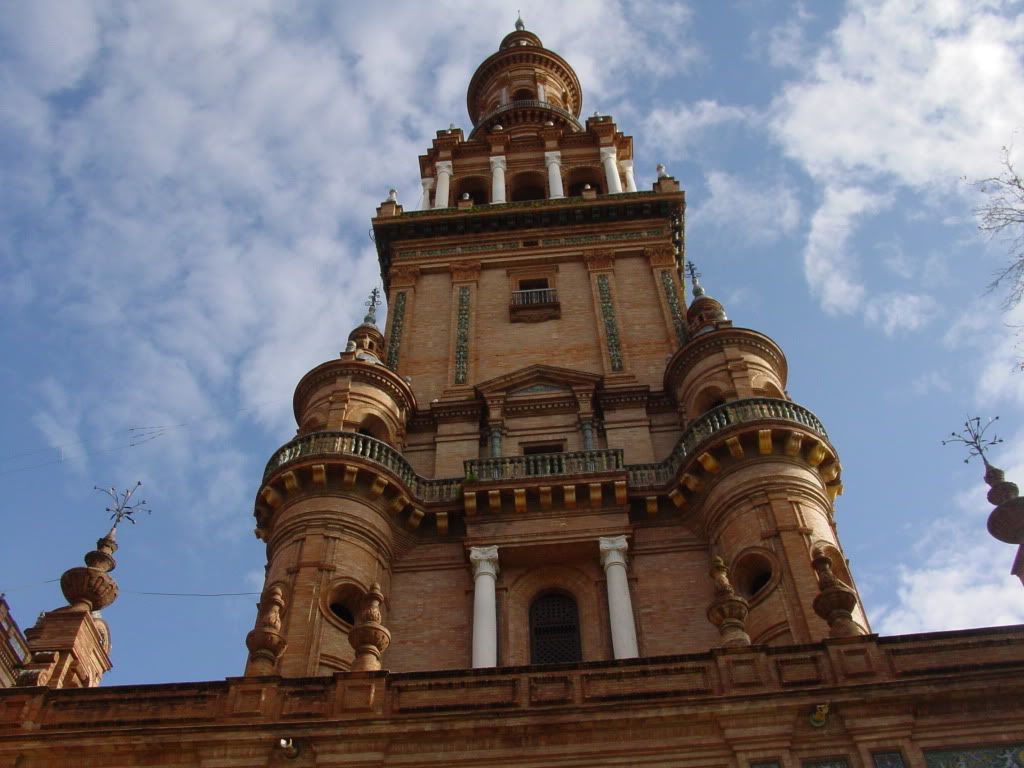
One of the towers flanking either side of the plaza.

Each province in Spain gets a little area around the plaza with a painting of a map and the most important event in that province's history.

And, for you Star Wars fans, here's a picture of one of the scenes filmed at the Plaza de España.

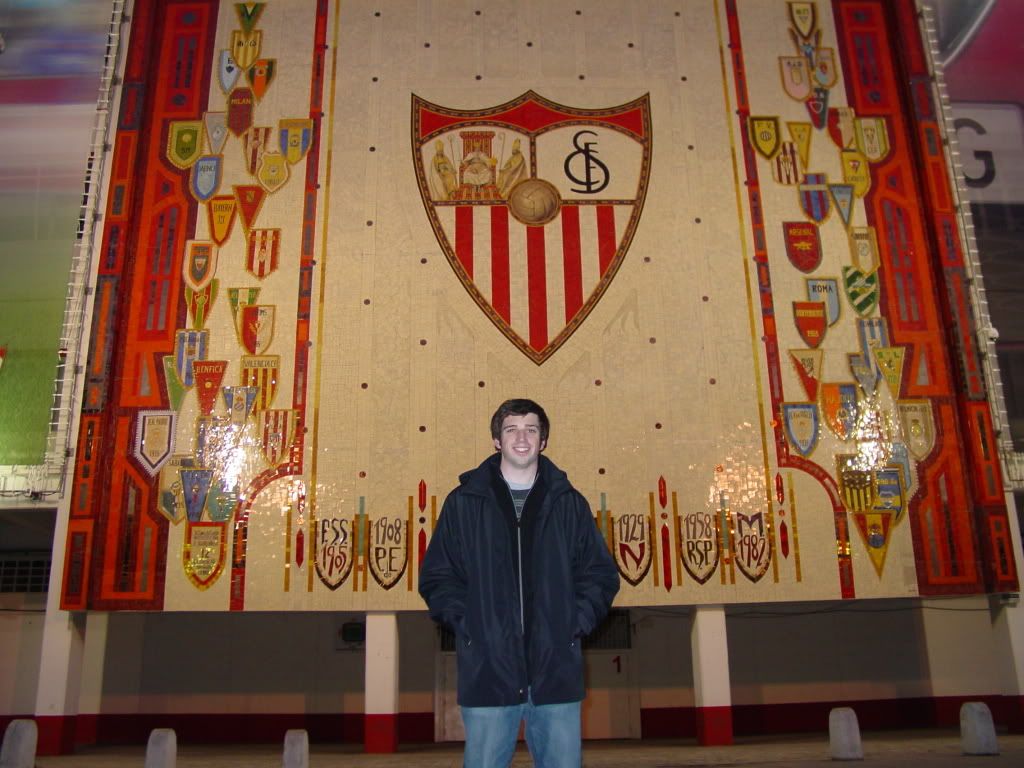
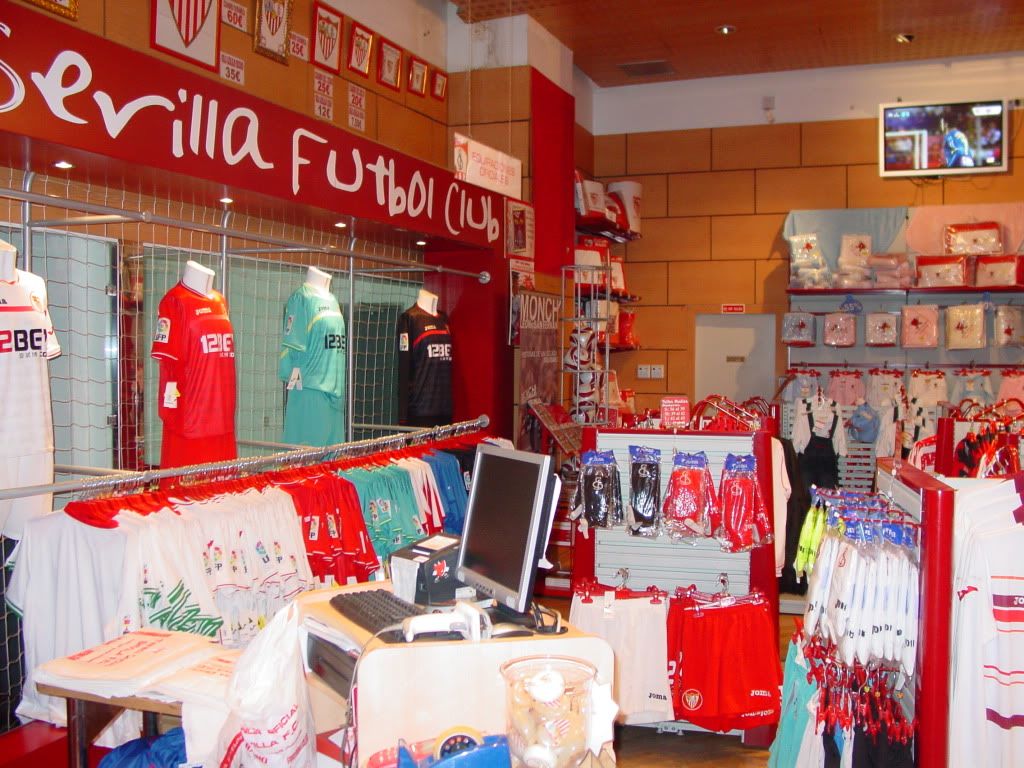
If you know me, you know that I like sports a little bit. So, I took a walk to the the Estadio Ramón Sánchez Pizjuán, home to Sevilla FC, the city's biggest and most important soccer club. They haven't won the Spanish league since 1946 but they've been relatively successful over the past five years or so, winning the UEFA Cup (Europe's 2nd biggest club soccer competition) in 2006 and 2007 and the Copa Del Rey (Spain's Kings Cup) last season. Also, on the subject of soccer, today I bought my ticket for next week's friendly game between Spain (the reigning World Champions) and Colombia in Madrid. Couldn't be more stoked. Meanwhile, back at the ranch: Here's what I saw on my walk:


Spanish people are very nice. The guy I asked to take my picture got down on his knees so as to get the best angle. We could learning something about being helpful to strangers in the U.S. from these people.

My favorite kind of shopping: just looking. I always prefer to take pictures of the stuff rather than actually having to pay for it.

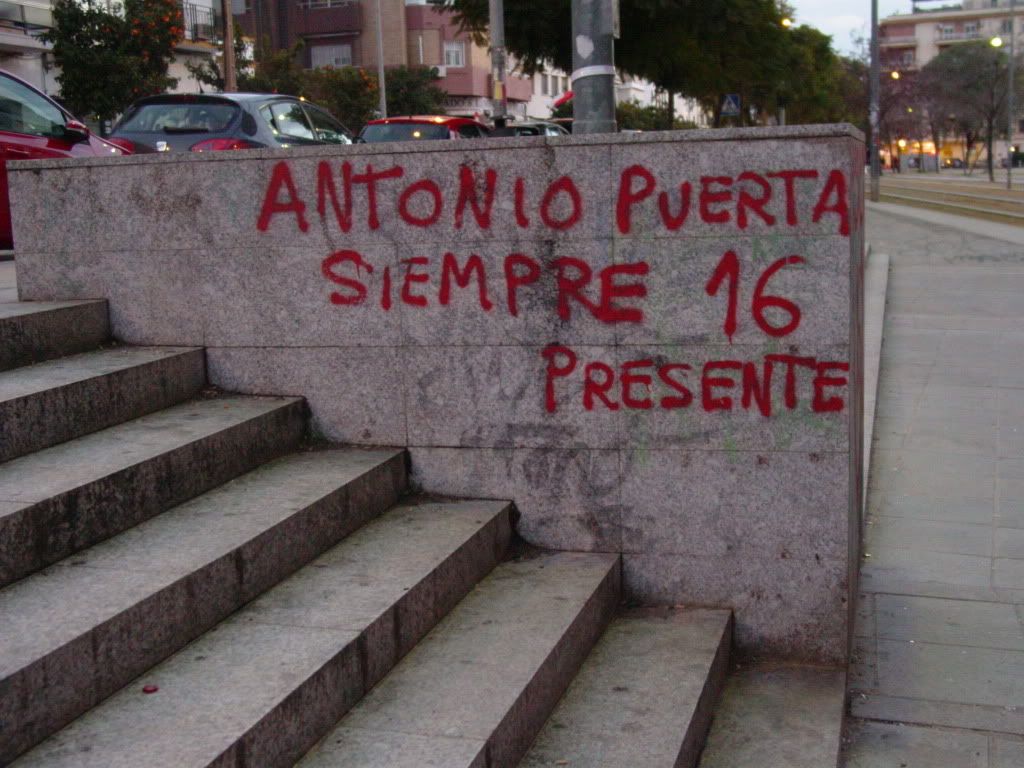
Antonio Puerta was a player for Sevilla who died on the field in 2007 after suffering a heart attack during the game. Translated, the writing means "Antonio Puerta is forever here."

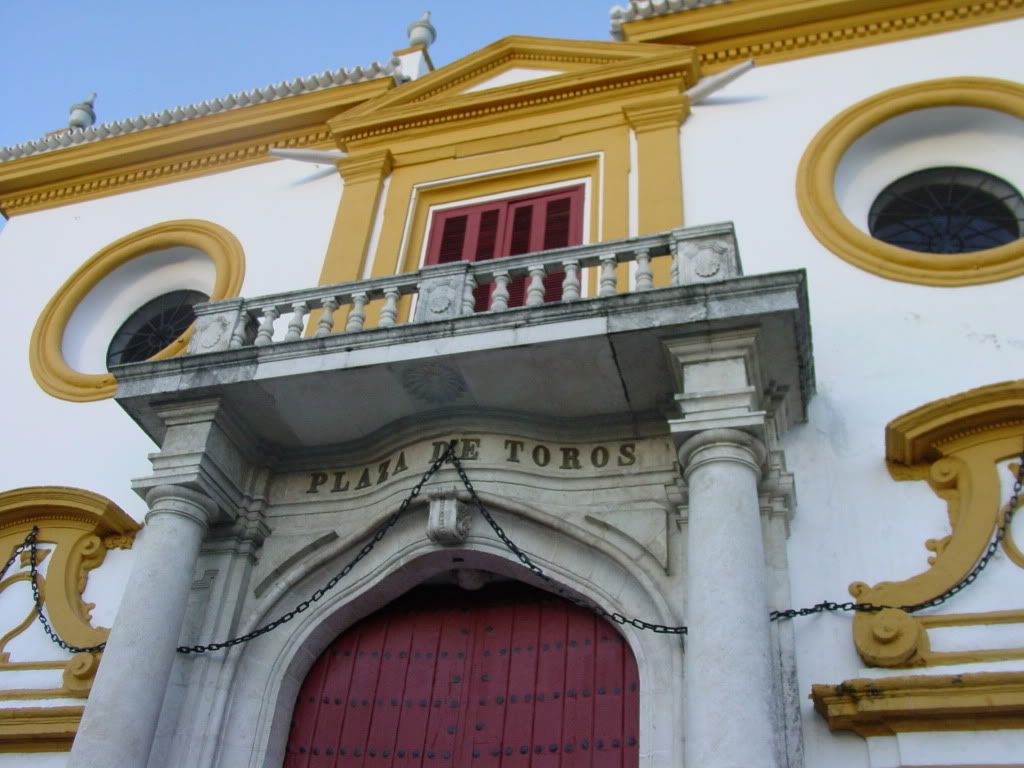
I also made it to the Plaza de Toros, Sevilla's bullfighting ring. They really love it down there--the season starts up again in March/April.

Outside of the Plaza de Toros.

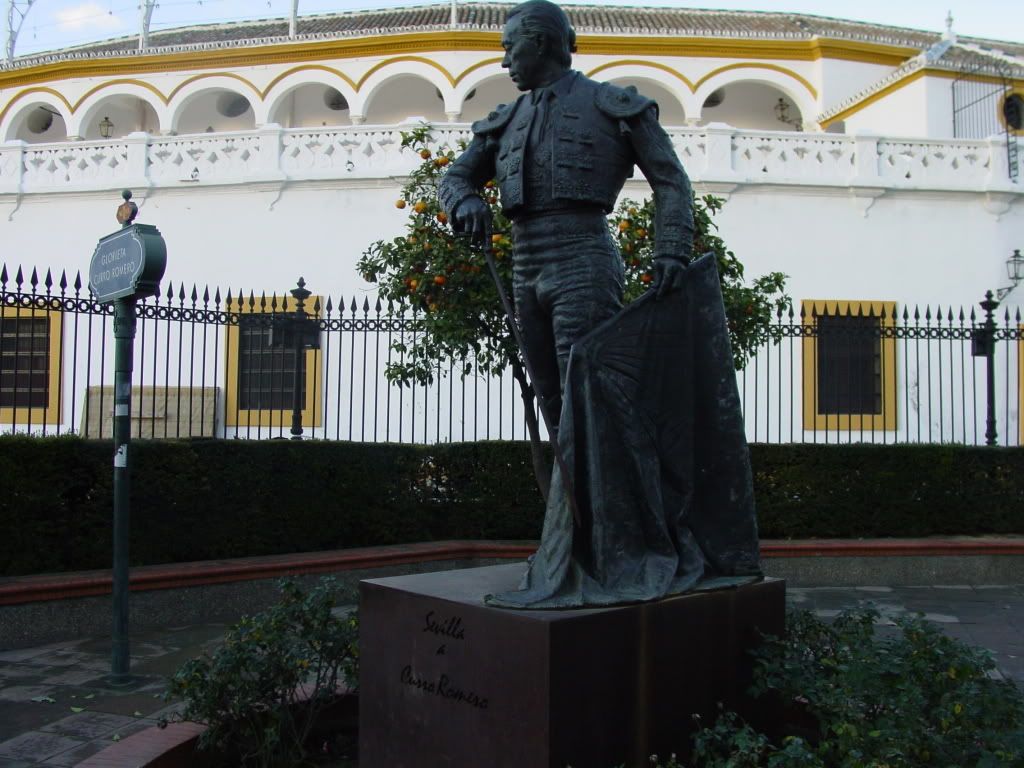
A statue of a famous bullfighter in Sevilla. The story goes that after suffering several injuries, this bullfighter was told by a doctor one day that he could no longer compete in his sport. Unable to cope with a life devoid of bullfighting, he killed himself that night.

Final news and notes from Sevilla:


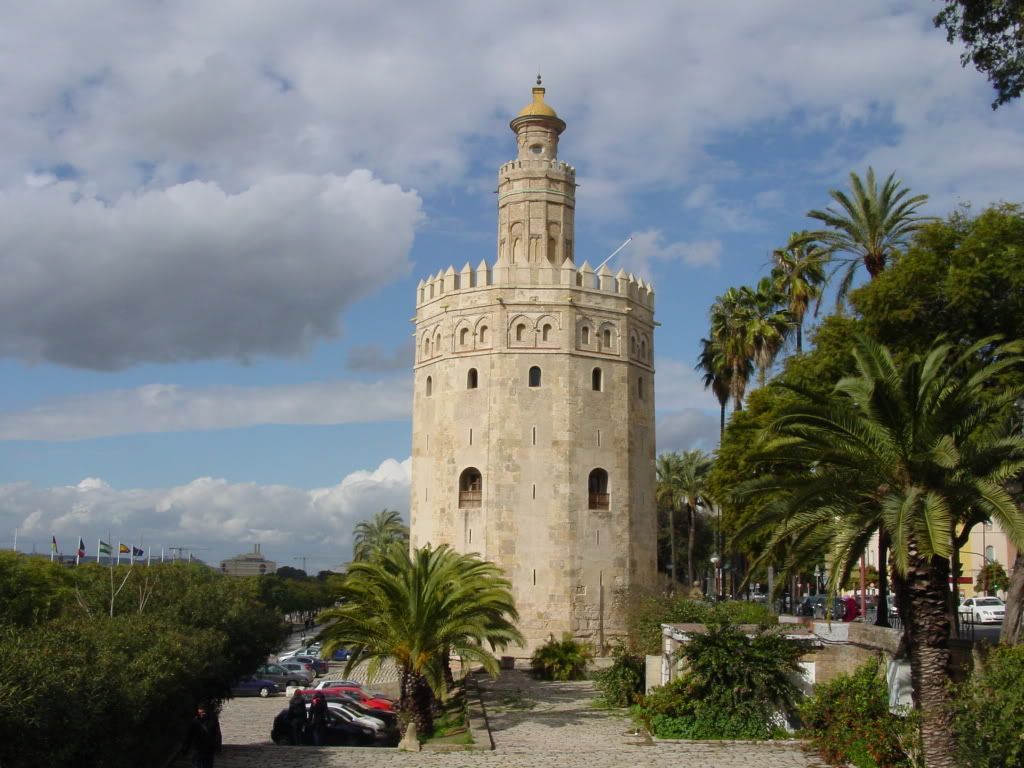
The Torre del Oro, or Tower of Gold. This used to be a military watchtower as many battles were waged over Sevilla, an important port city.

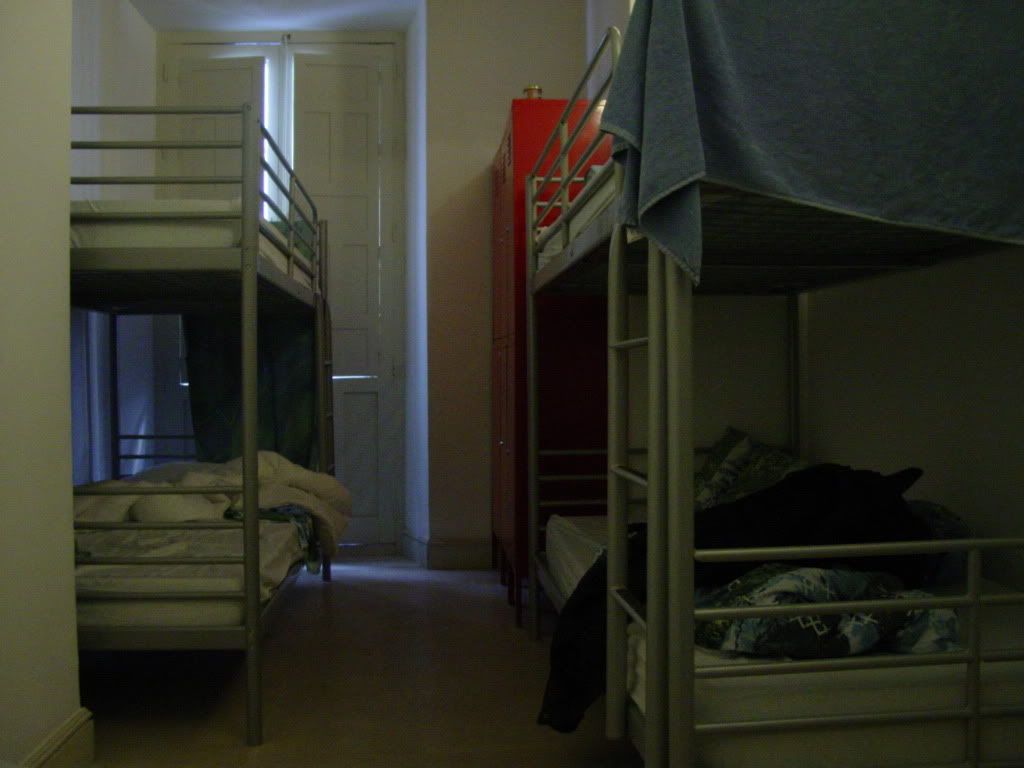
My room in the hostel. A very good first hostel experience--a little different sleeping in a room with five strangers but at least no one snored.

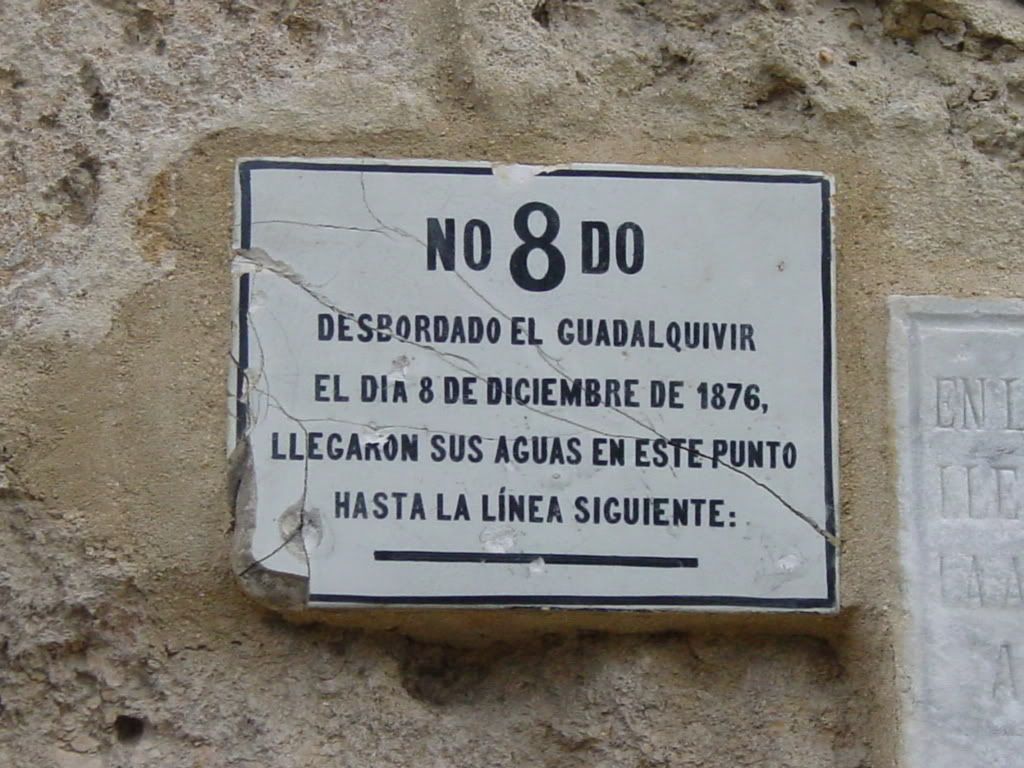
This inscription can be seen all over Sevilla. The symbol in the middle is not an 8 but rather the Spanish symbol for infinity. When read, it says "No madeja do" which sounds very similar to "No me ha dejado" which means "She has not abandoned me." Story goes, the king of Spain didn't like his son so he tried to name his grandson as his successor. The rest of Spain rallied behind the grandson, forcing the son, Alfonso X, to flee to Sevilla, the only city in Spain that would grant him safety. The people of Seville then developed this motto, pointing to the fact that they were the only ones to never abandon the true heir to the Spanish throne. They've kept it around as a sort of testament to their city's rich history.

And while Sevilla may never leave you, I had to leave her. That's all for now. I'll be staying in Madrid this weekend and exploring so hopefully I will have lots of things to share in the coming days! Until later, hasta luego.
Tuesday, February 1, 2011

Weekend in Sevilla Part 1: City Overview and Cathedral


Wow, it's been a while since I've added an update on my goings-on in Spain. The "study" part of study-abroad has become a little more time consuming over the past week so I've had fewer noteworthy excursions. This weekend, though, a big group of us headed down to Sevilla (Seville in English) to explore the sights, sounds and smells of the south of Spain.
A charming city on the Guadalquivir River, Sevilla has a distinct personality--very different from Madrid. First, the weather was much warmer--it got into the 60s while it's been in the low 30s on my walks to school in the morning in Madrid. Sevilla had a very Mediterranean feel to it--orange trees everywhere, the river running through the city and less big buildings. The city is famous for it's passionate, sometimes over-the-top celebrations which fit perfectly with their two specialties--bull fighting and flamenco dancing (more about those later).

We stayed in a very nice hostel (a good first experience with that!) in the center of the city, a perfect home base for exploring the city. I took plenty of pics so follow along for a tour of beautiful Sevilla!

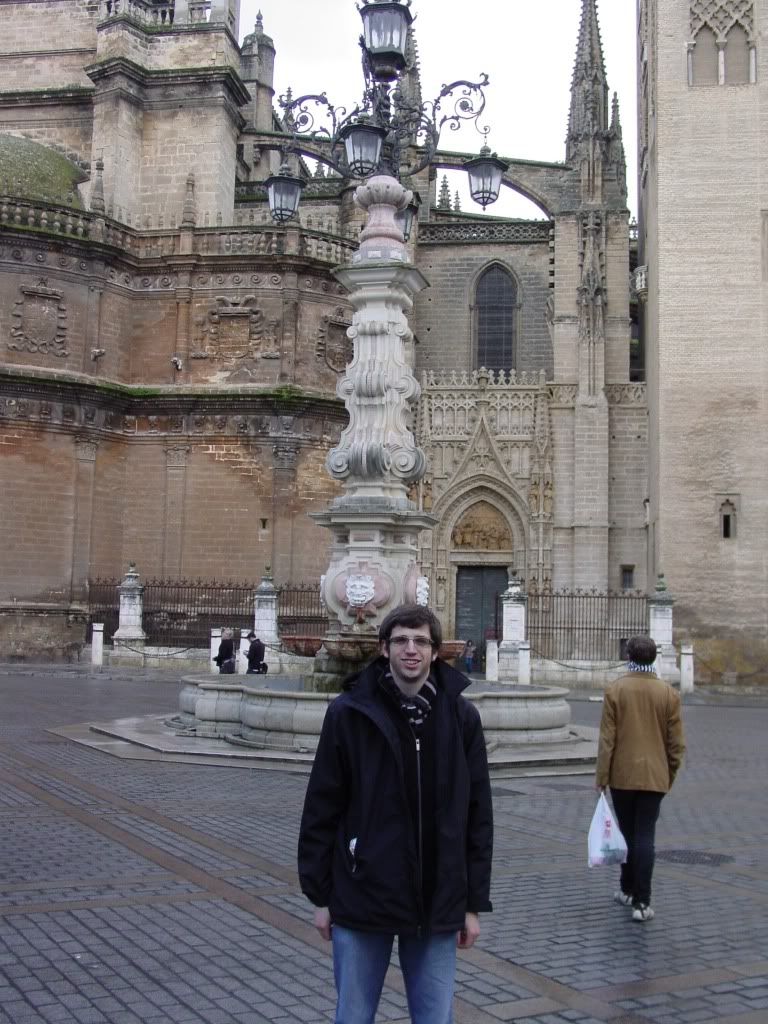
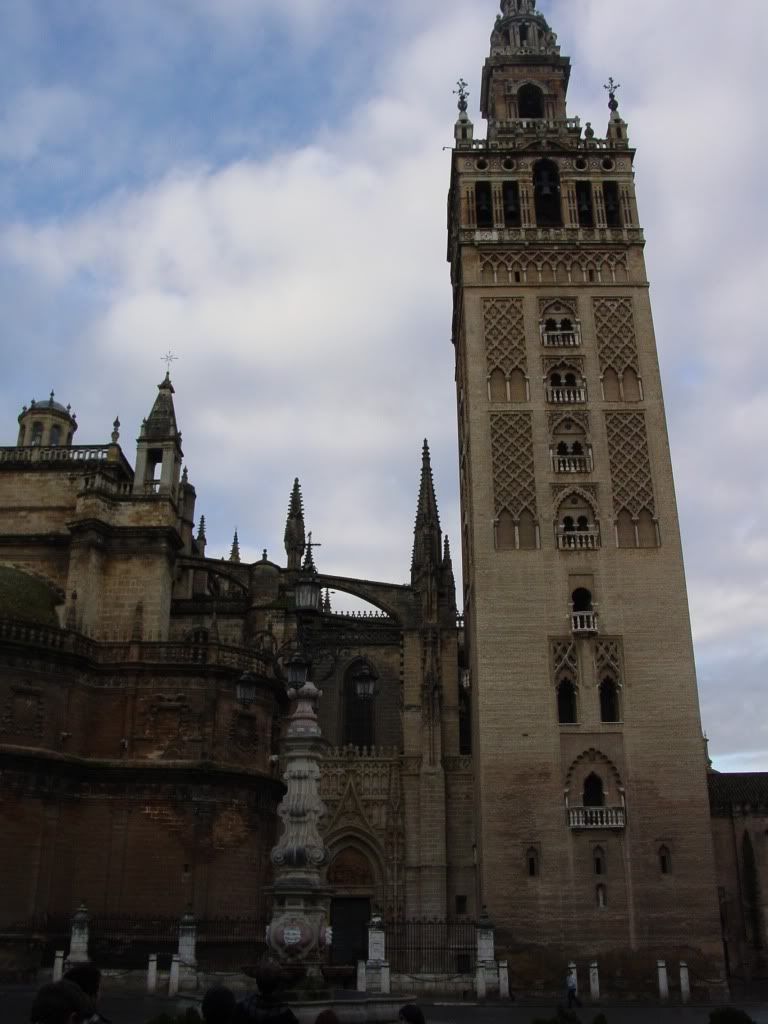
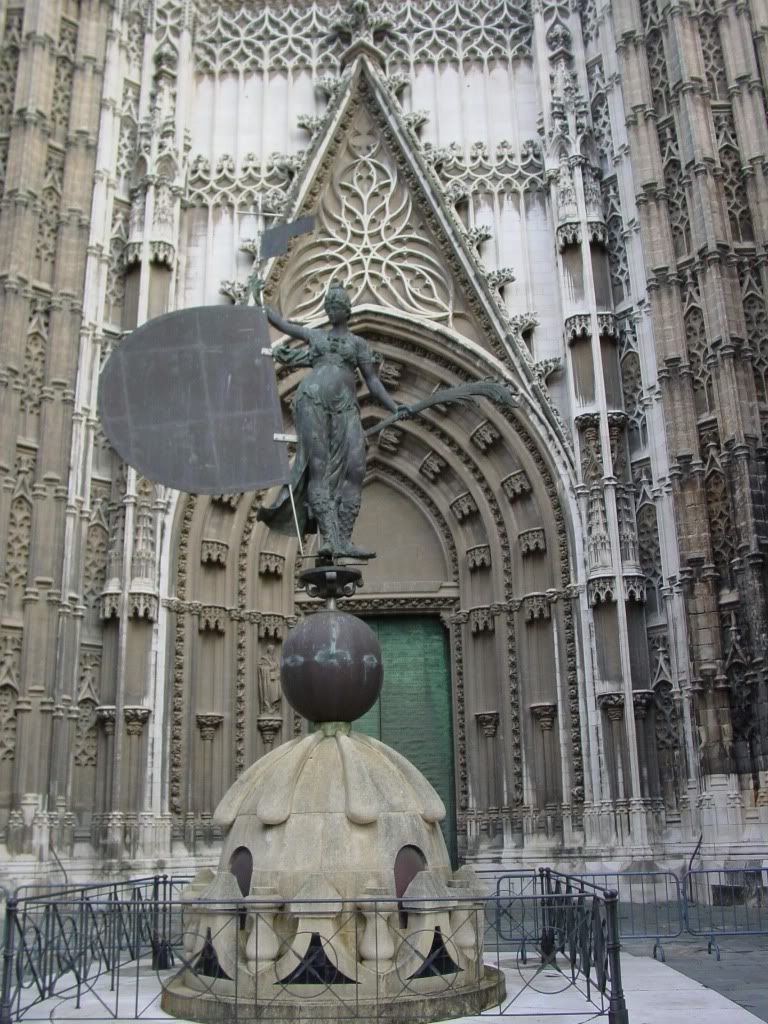
First stop, the city's Cathedral, just down the street from our hostel and the third largest church in the world. It was originally built as a Mosque and completed in 1198, but transformed into a cathedral after the Christians conquered the area about 100 years later. The tower, called La Giralda, is the only part of the original Mosque still standing and has survived several large earthquakes. At one point, it was the world's tallest building. Also, Christopher Columbus' tomb is housed inside of the Cathedral--or at least that is what Sevilla claims. Apparently scientists have confirmed that at least 10% of Columbus' remains are located in the tomb in Sevilla, although there are many other cities (some in Latin America) that claim to have his tomb as well.

We went into the cathedral a couple of times. Once to look around on Friday and another time to go to mass on Sunday. There were surprisingly very few people there for Sunday mass in Spain's biggest church but it was a fun experience nonetheless.


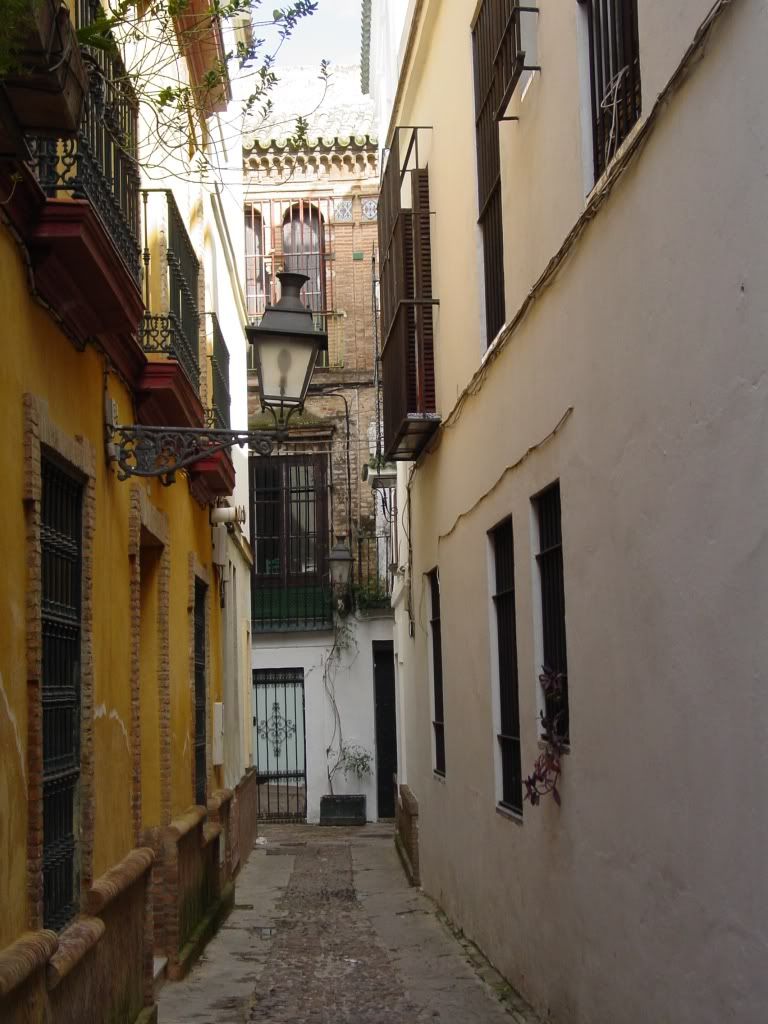
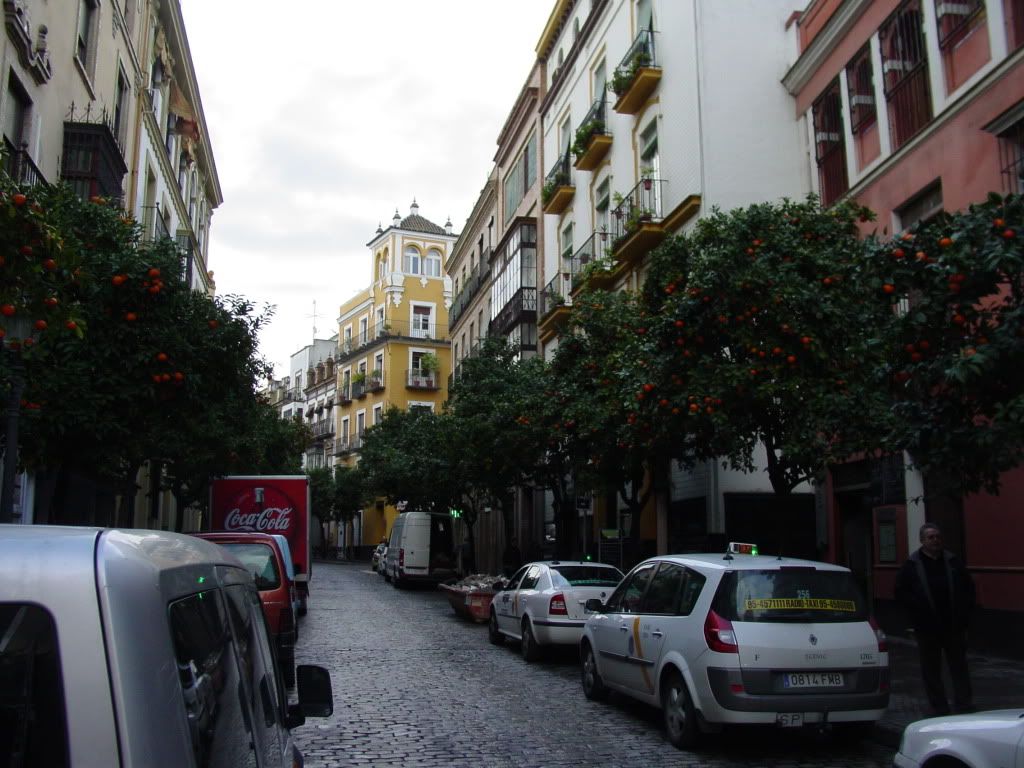
They sure love their small streets in Europe.

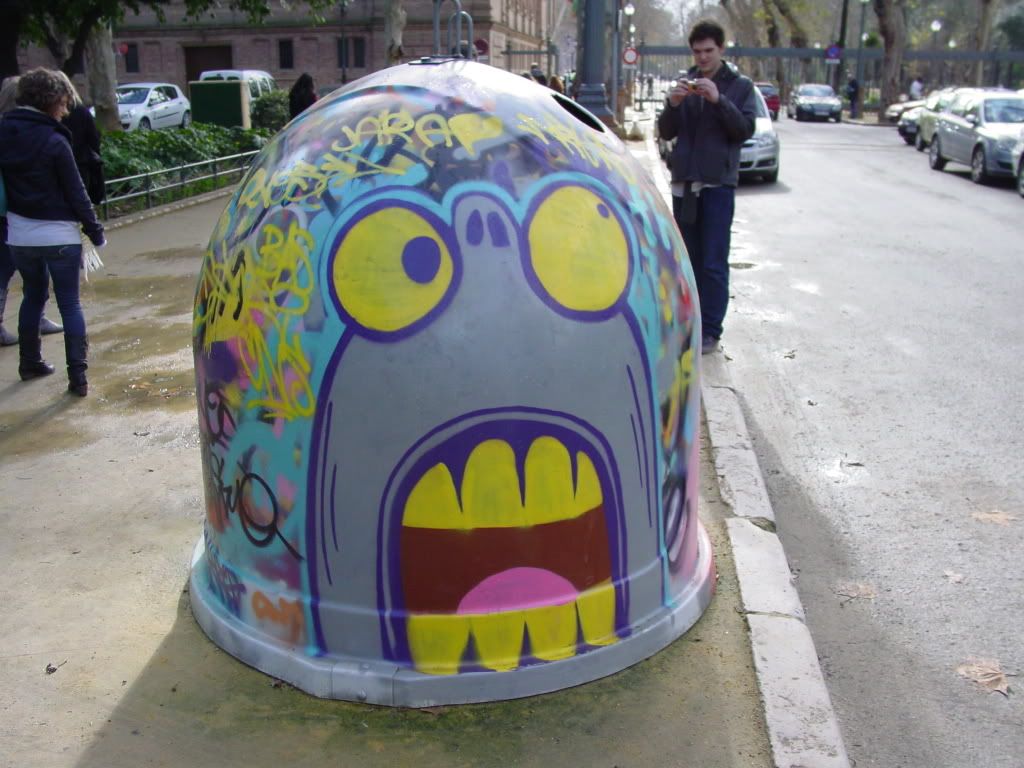
Sevilla's version of graffiti. Looks like something out of Spongebob.

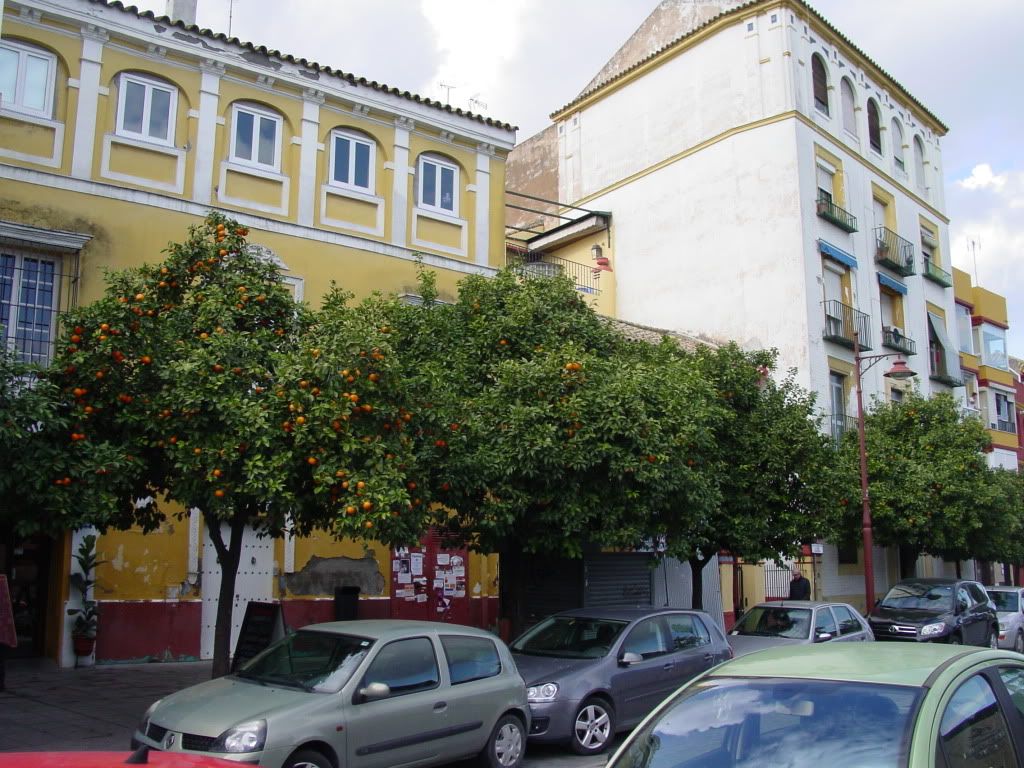
Lots of orange trees throughout the city. Apparently they were planted there when the Muslims ruled the city--it is common for orange trees to be planted outside of mosques for their aroma-therapy potential.

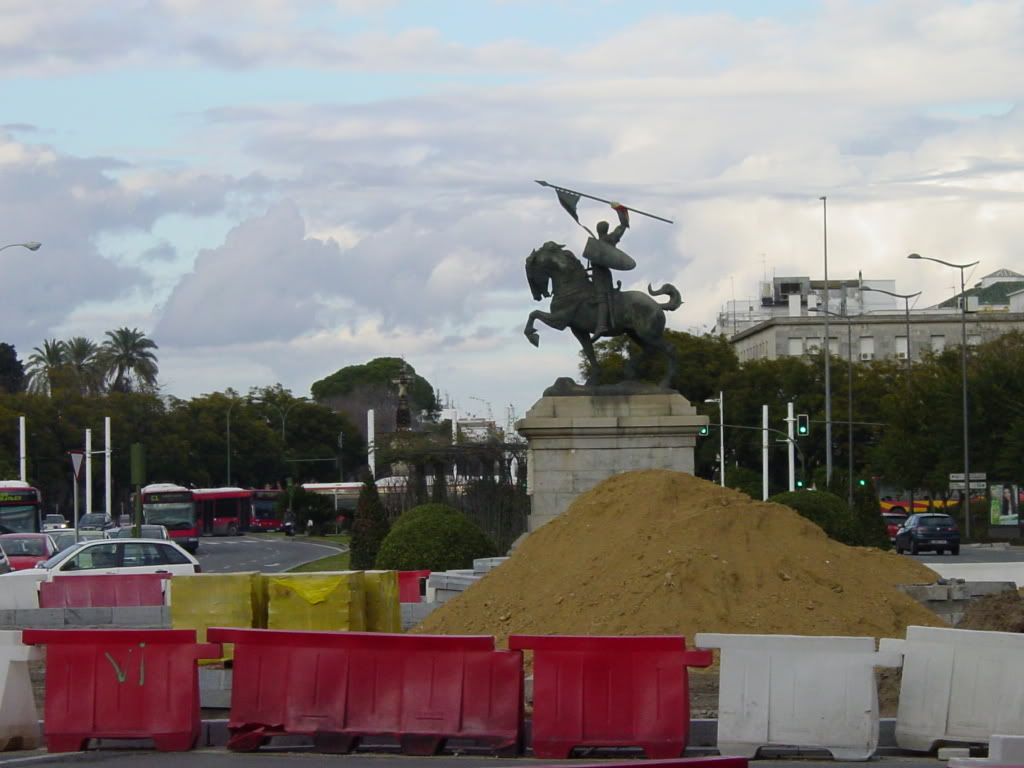
Still some big, busy streets but much more of a small-town feel than Madrid. Kind of like a smaller, more historic Miami.

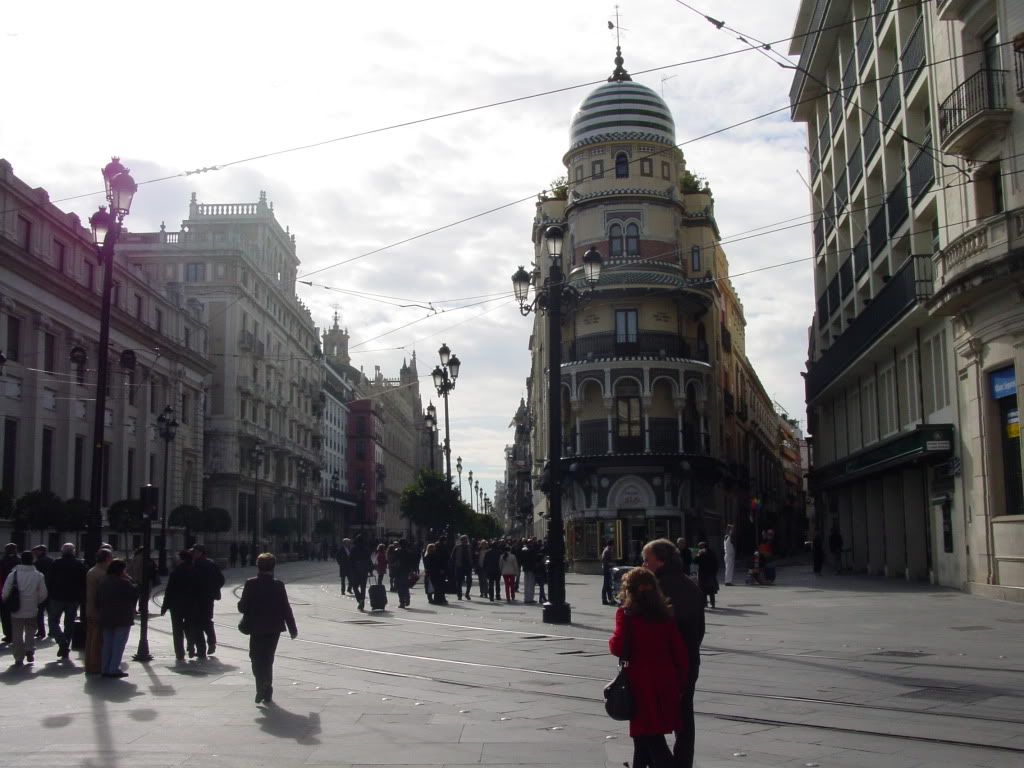
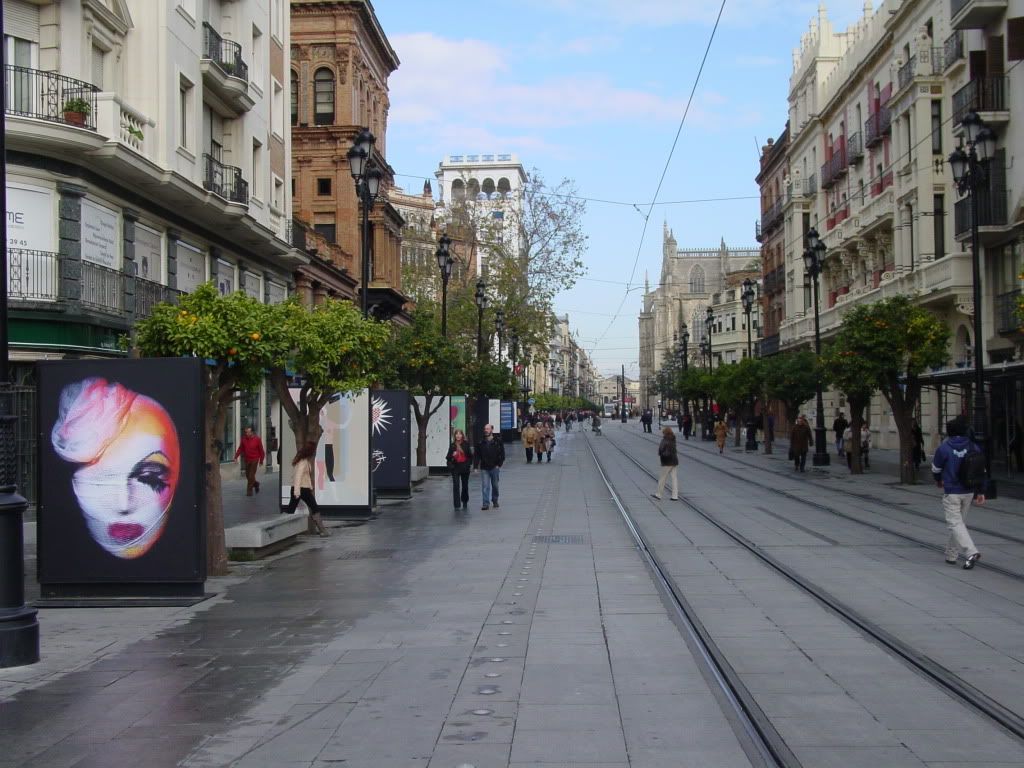
The main drag in Sevilla. Very pretty.

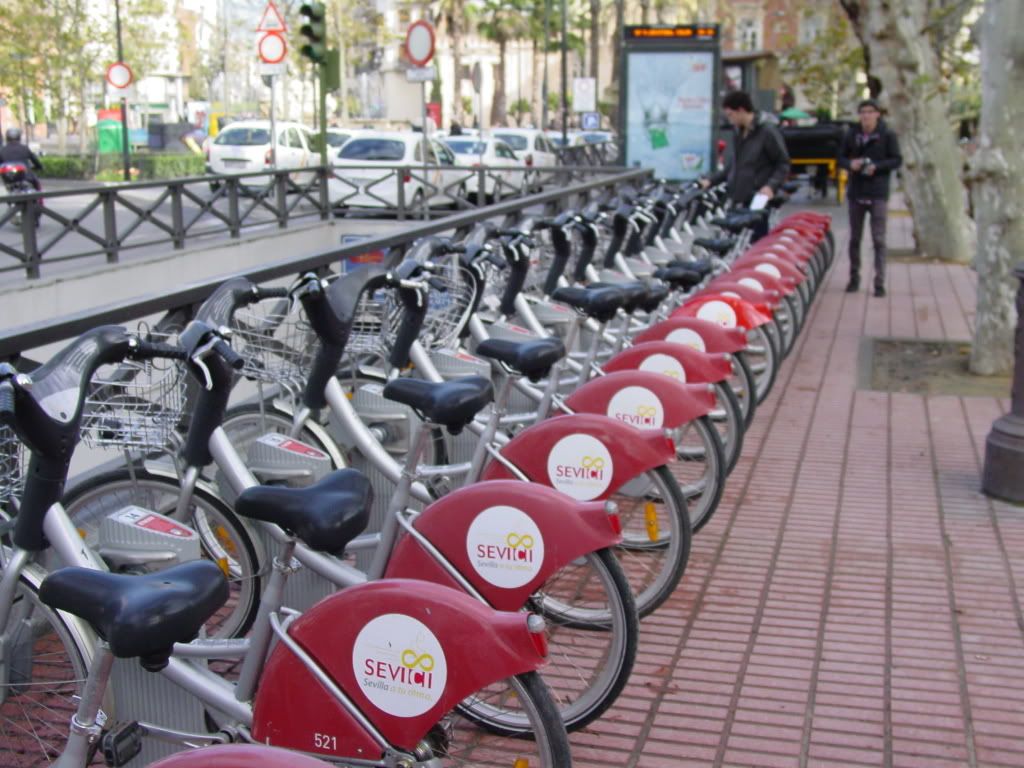
They like to bike! Public bikes available for rent.

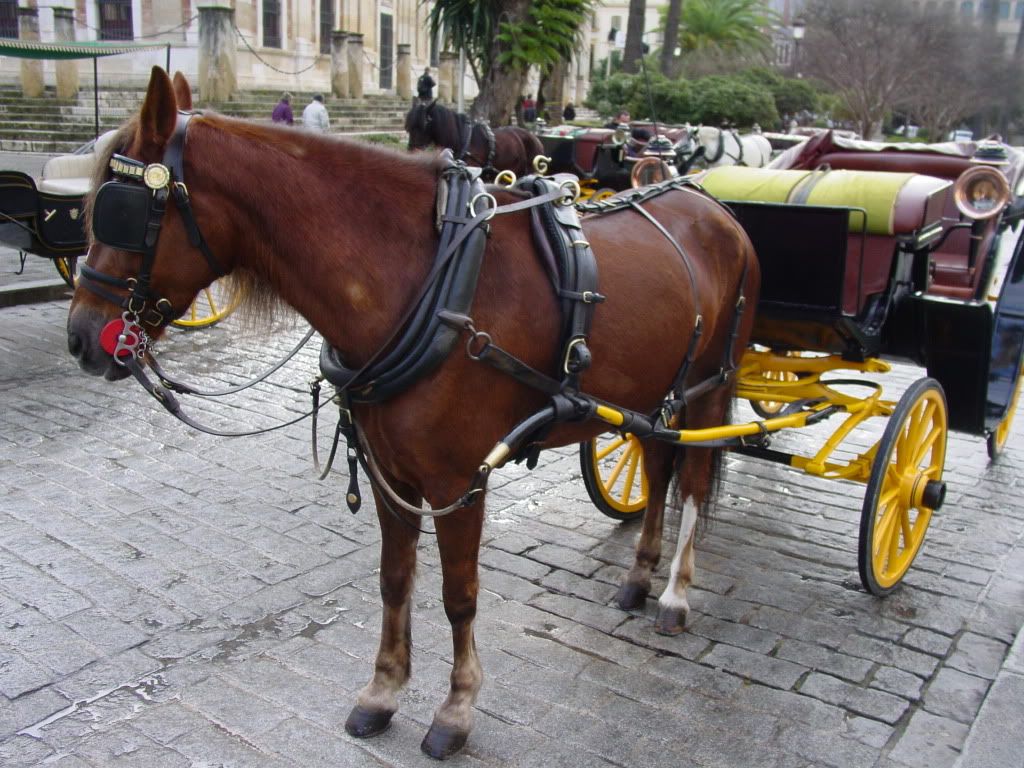
If biking is not really your style, you can take a horse-drawn carriage instead.

Downtown Sevilla with above ground metro tracks.

The street our hostel was on.

The cathedral with La Giralda on the right.

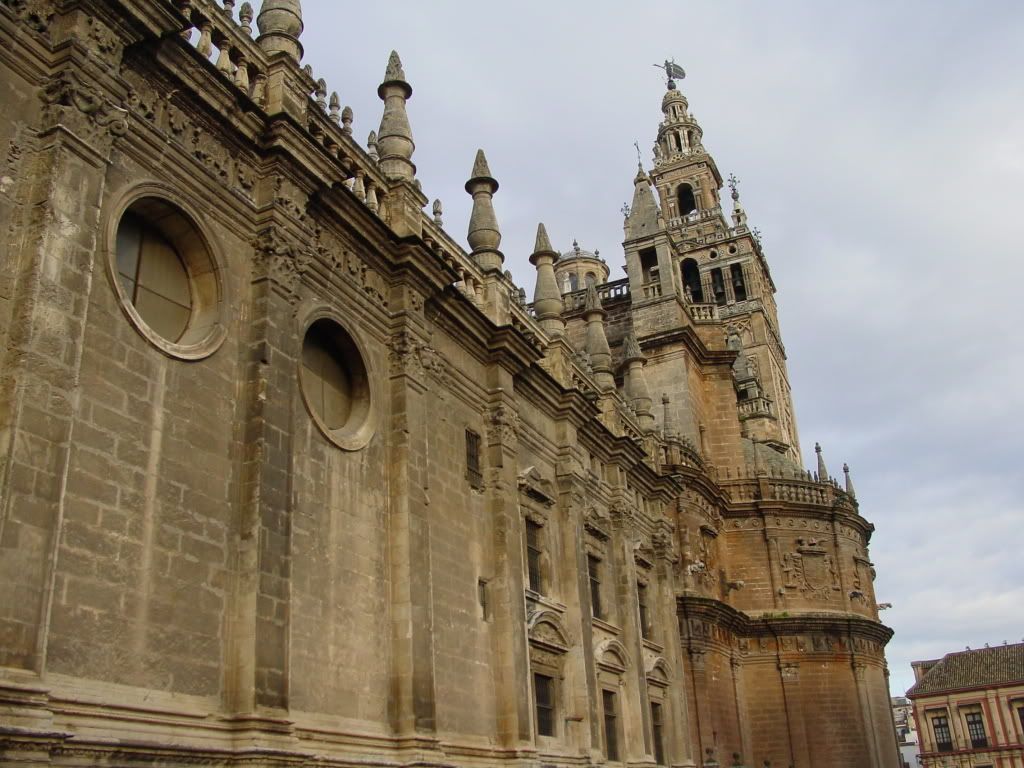
More cathedral.


Still more.

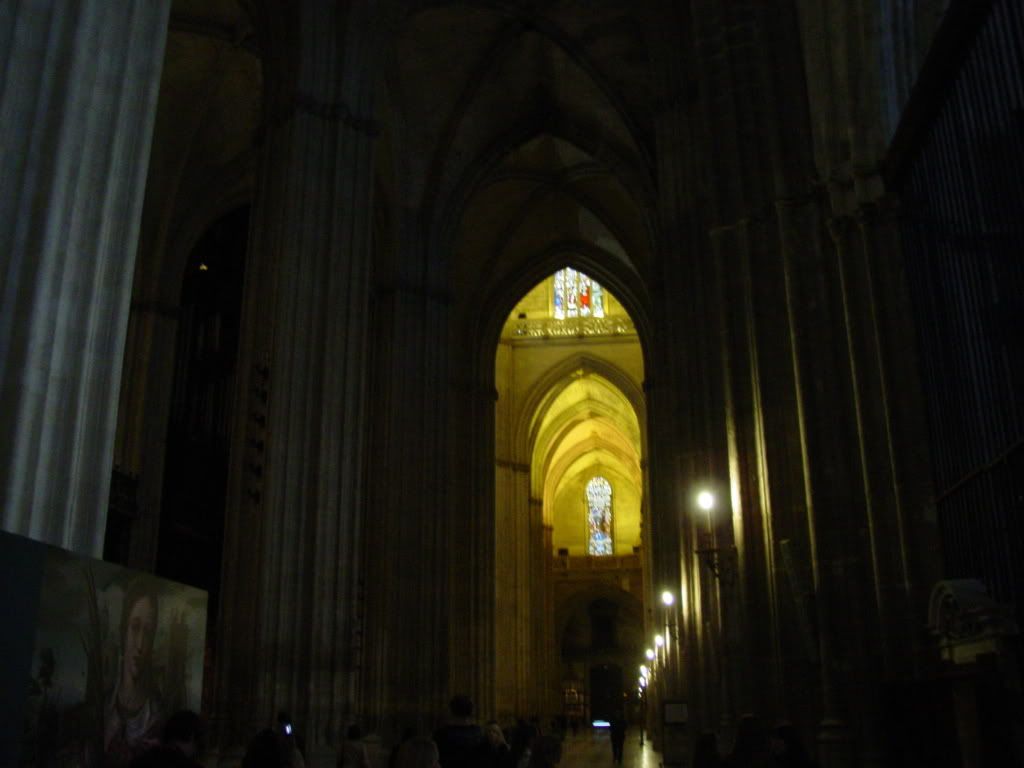
I'm mastering the art of undercover pictures. It's still tough to capture how big this church is.

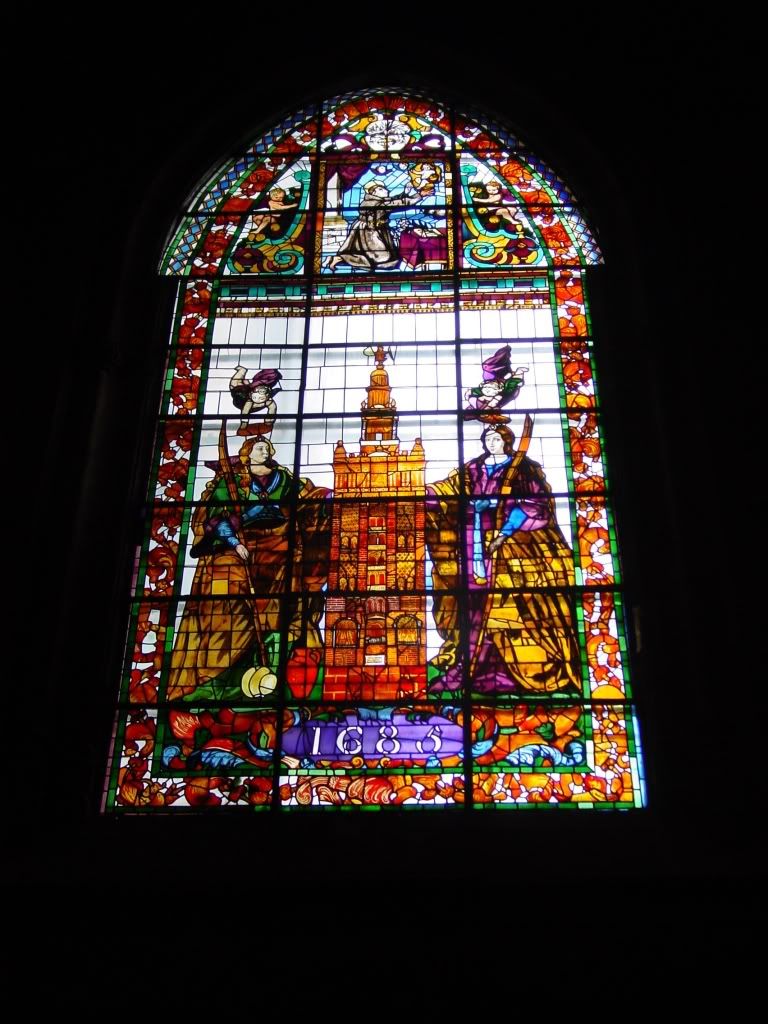
Not just big but beautiful as well. Lots of stained-glass windows.

Well, that's all for now. Tomorrow (hopefully!), Part 2: The Alcazar and its beautiful gardens. íHasta mañana mis amigos!